


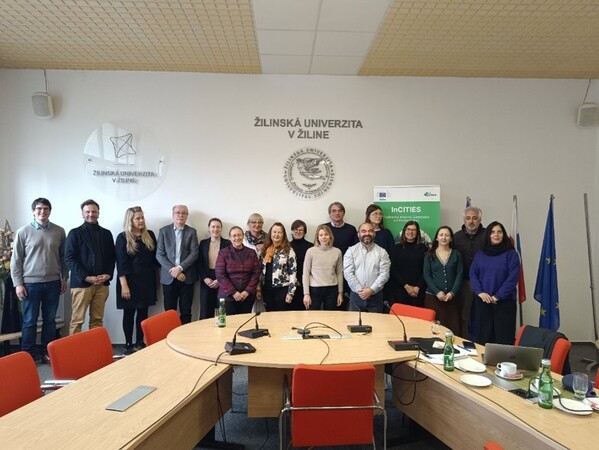
Closure of the InCities project: review of project activities.
The InCITIES project is a winner of the call for proposals Horizon Europe: Widening participation and spreading excellence. It consists of a consortium of five European universities: Université Gustave Eiffel, Technology Arts Sciences TH Köln (Germany), LAUREA University of Applied Sciences (Finland), ISCTE University Institute of Lisbon (Portugal) and the University of Zilina (Slovakia), focusing on the topics of sustainable cities and territories. InCITIES is a three-year project (October 2022 - September 2025) that aims to transform higher education institutions and their surrounding ecosystem by focusing on cities' needs for inclusion, sustainability and resilience. It addresses the European and global challenges facing cities, with a particular focus on the European Union member states that are part of the “widening countries” (Portugal and Slovakia), in order to enable them to overcome the structural, socio-cultural, economic, political and institutional obstacles to their integration into the European Union.
The actions of the InCITIES project
The main themes of the project are defined through Work Packages (WP). There are seven of them, two of which (WP1 and WP7) deal with internal project issues, organisation and communication.
WP2 - Innovative research hub: Coordinated by Gustave Eiffel University, this work package aims to develop a ‘knowledge hub’ by creating a community of researchers from different universities working in one of InCITIES' seven key areas: questioning urban transition, nature in cities, energy, vulnerability-inclusion and health, digital transition, mobility and, finally, urban resilience. The scientific coordination of this community was carried out via webinars called Scientific Cafés, of which eight sessions were held. These online events brought together researchers from partner universities to discuss their respective work. Read our article on the Scientific Cafés.
WP2 also produced a strategic research agenda, and some research topics served as the basis for two blended intensive programmes (BIP) in Lisbon and Zilina.
WP3 - Talent Scout and Career Opportunities Strategy: coordinated by TH Köln University, this work package focuses on the attractiveness of careers in research - research professors, postdoctoral researchers and doctoral students - and on improving their working conditions. To this end, TH Köln has offered support to various universities in obtaining the HRS4R (Human Resources Excellence in Research) label, a European label certifying the quality of research supervision. Each of the partner universities, including Gustave Eiffel University, has thus been able to work towards meeting the conditions and submitting an application for certification.
WP4 - Actions Towards Equality, Diversity & Inclusion: this work package, coordinated by LAUREA, established an EDI (Equality, Diversity & Inclusion) plan organised around eight points: management commitment, inclusive learning and working culture, an inclusive environment and confidential contact points, transparent and regular monitoring, integration of EDI into study programmes and research practices, recruitment, selection and career development processes, community engagement, and communication and continuous improvement. A chart of good practices was drawn up and signed by the five InCITIES partners.
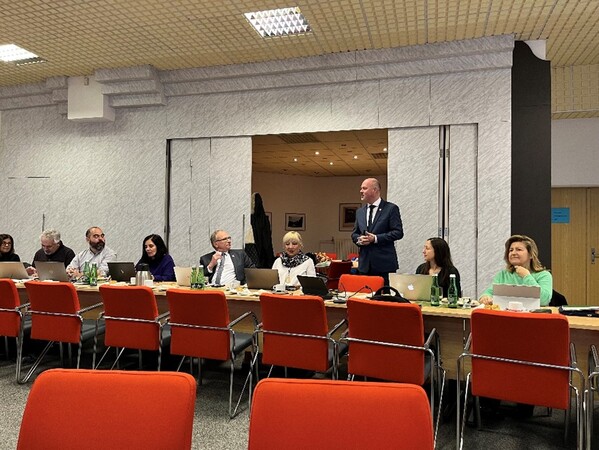
WP5 - Address Enablers and Barriers to Integration of the InCITIES partners: Coordinated by ISCTE, the main objective of WP5 is to mitigate barriers related to education/research, administration/institutions and technology, as well as those related to internationalisation and regulation, in order to effectively build an alliance with higher education institution partners and develop synergies to find practical solutions. Its work has notably led to the establishment of various dual degrees, including one between Gustave Eiffel University and ISICTE.
WP6 - Capacity building Actions on Learning by Developing Pedagogical (LbD) Model in ISR Cities: coordinated by Zilina, WP6 aims to co-create a common understanding of the LbD model and how it can be applied within the consortium; build a knowledge base comprising data, information and best practices for inclusive, sustainable and resilient (ISR) cities.
The InCITIES project and the PIONEER Alliance
The InCITIES project paved the way for the PIONEER Alliance, which was officially launched in February 2025. This alliance brings together the various members of InCITIES, plus five other European universities. Most of the work begun within InCITIES is being taken up and continued by the alliance. This is particularly the case for the knowledge hub, which will be developed and integrated into PIONEER. It has also enabled experimentation with different forms of international student mobility and the internationalisation of training programmes, which now allows the alliance to offer innovative and tailored solutions.
For more information on the InCITIES project, visit the website and dedicated page.
For more information on the PIONEER Alliance, visit the website and dedicated page.