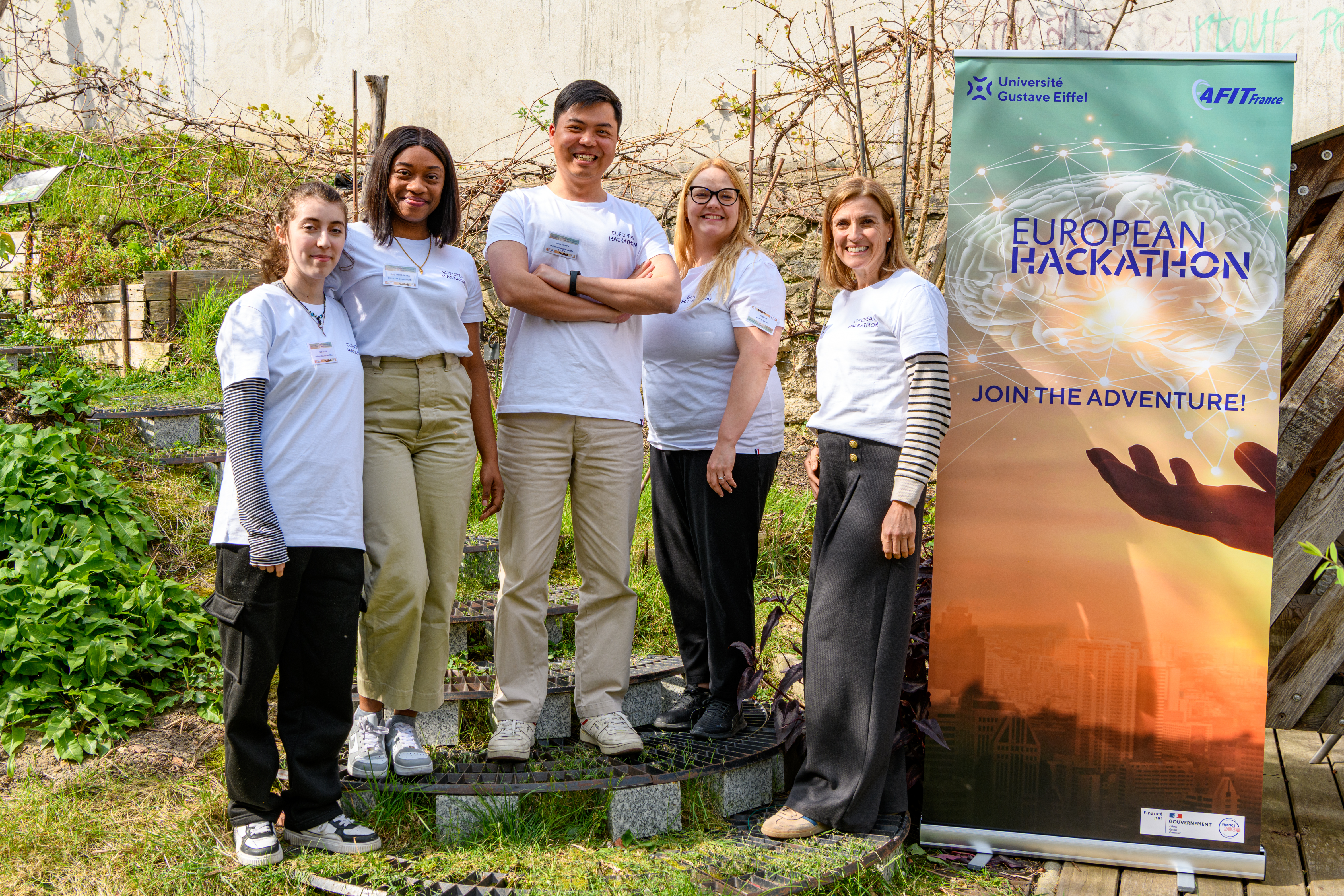



5th European Hackathon: what solutions are there for transport in low-density areas?
A collective reflection on the future of mobility
Since 2021, Université Gustave Eiffel and AFIT France have been working together to analyse trends in mobility – both passenger and freight – and their impact on transport infrastructure.
The European hackathon forms part of this initiative, bringing together students from a range of disciplines each year to develop innovative and forward-looking proposals.
This initiative helps to stimulate discussion on transport policy whilst demonstrating Université Gustave Eiffel’s commitment to fostering dialogue between research, education and societal challenges, in close collaboration with its institutional partners.
A European and interdisciplinary hackathon
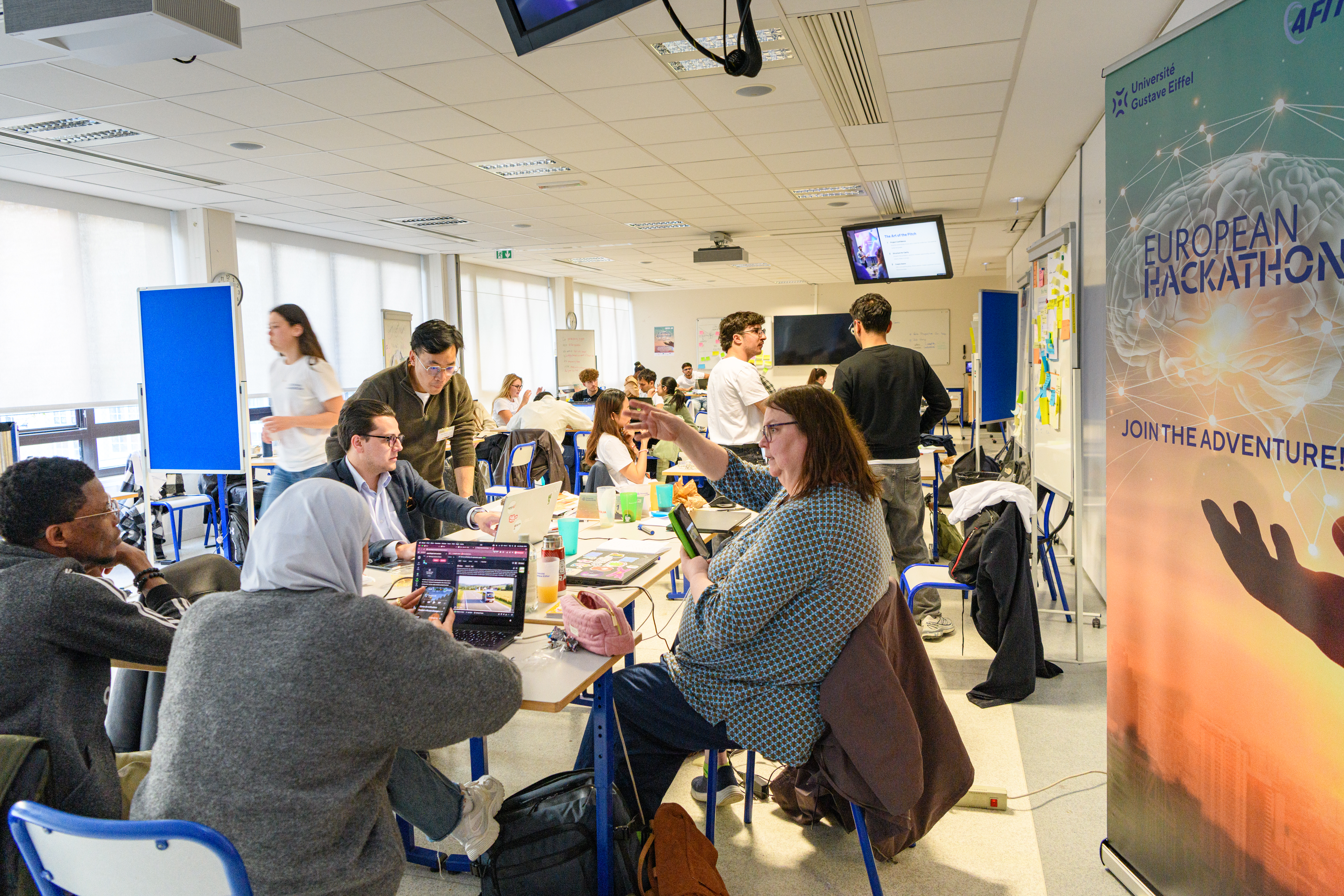
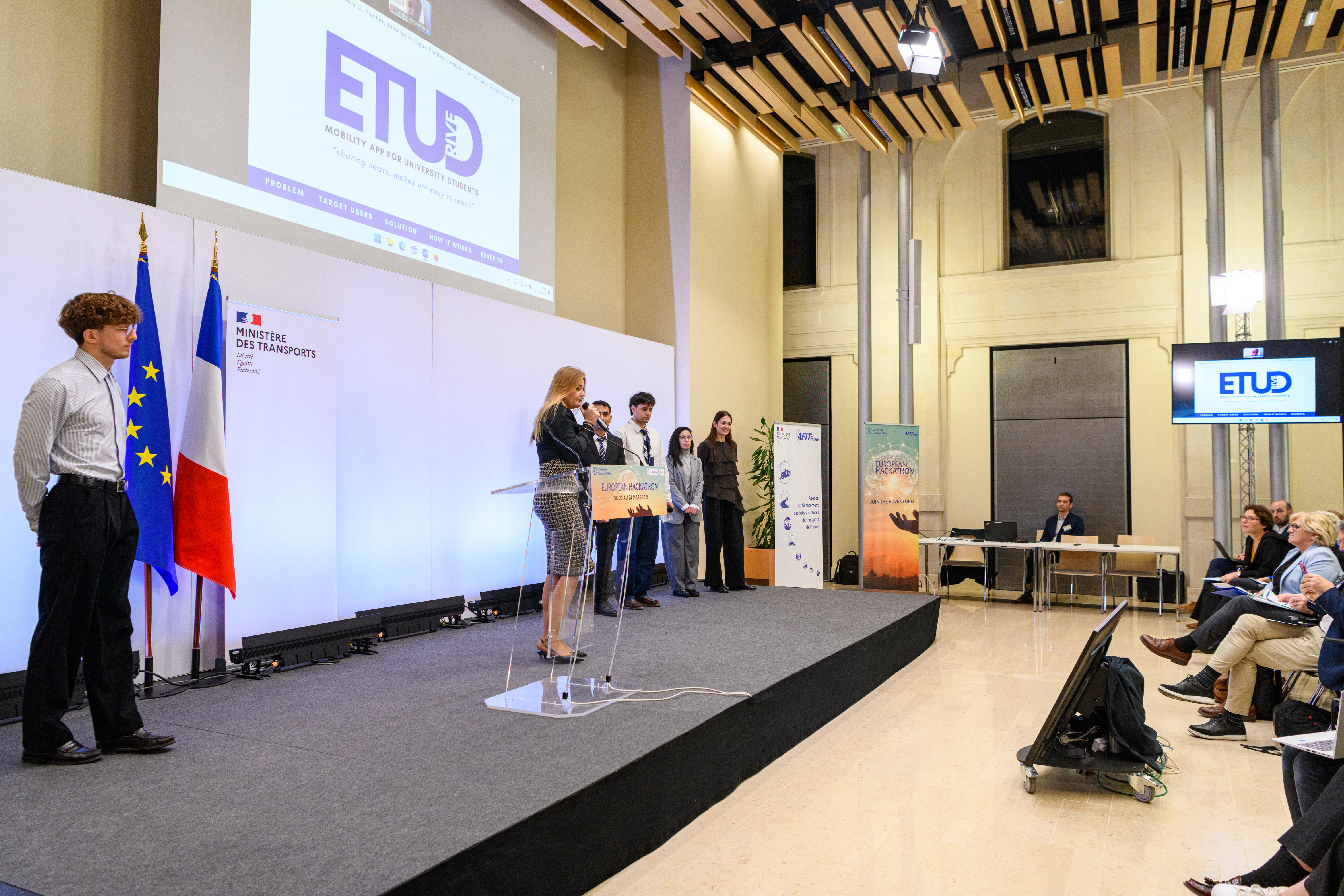
For this fifth edition, 45 Master’s students (first- and second-year) were selected from several European universities, most of which are partners in the European PIONEER alliance, a project dedicated to the city of tomorrow and coordinated by Gustave Eiffel University.
It brought together 24 students from the partner universities:
- IUAV University of Venice (Italy):
- UniBo, University of Bologna, (Italy)
- ISCTE-University Institute of Lisbon (Portugal)
- LAUREA, University of Applied Sciences, Vantaa, (Finland)
- TH Köln, University of Applied Sciences, Cologne, (Germany)
- UNIZA, University of Zilina, (Slovakia)
As well as 21 students from Université Gustave Eiffel and its constituent schools: the Paris School of Urban Planning (EUP), the Paris School of Urban Engineering (EIVP), ESIEE Paris, Geodata Paris and the Gaspard Monge Institute of Electronics and Computer Science (IGM).
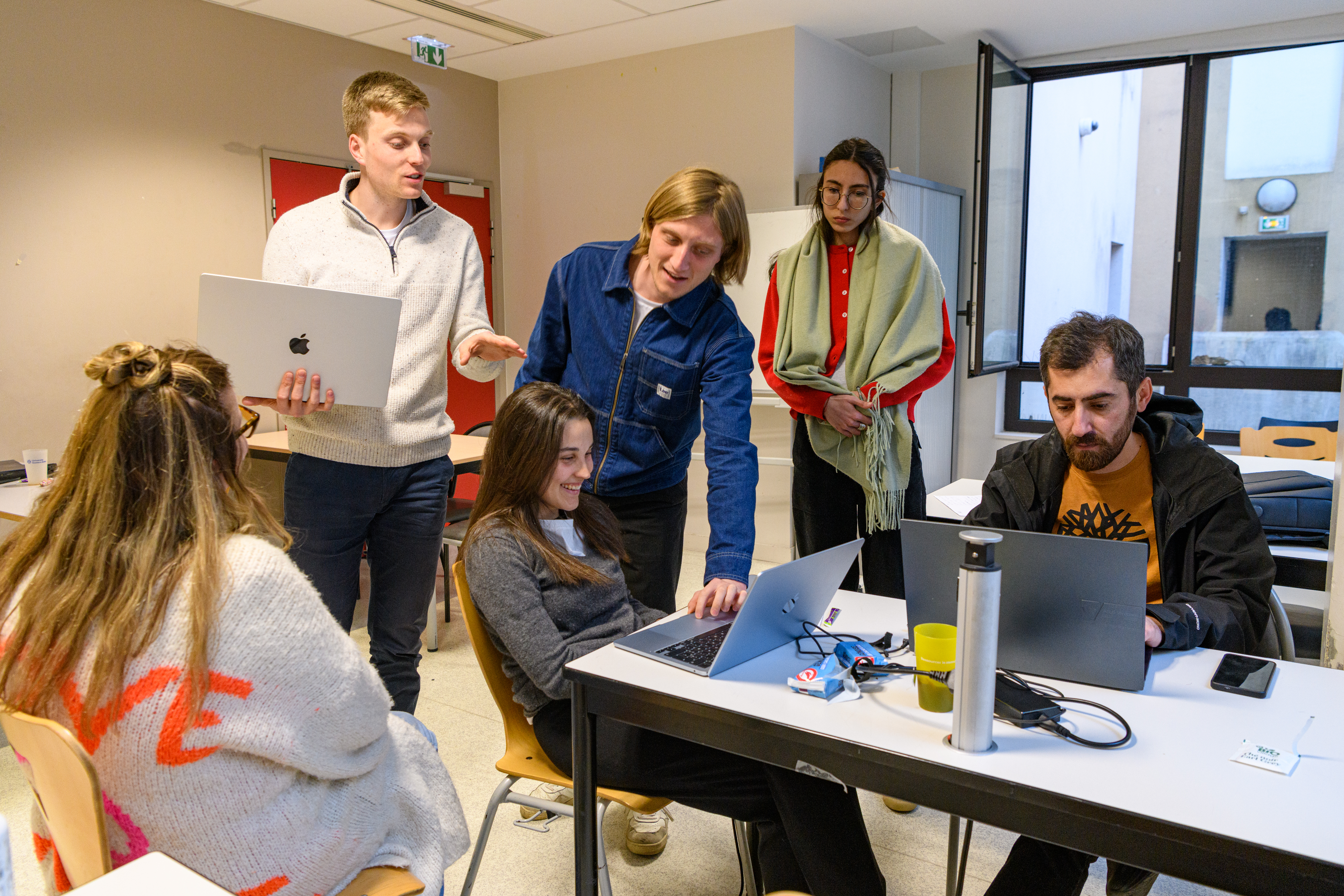
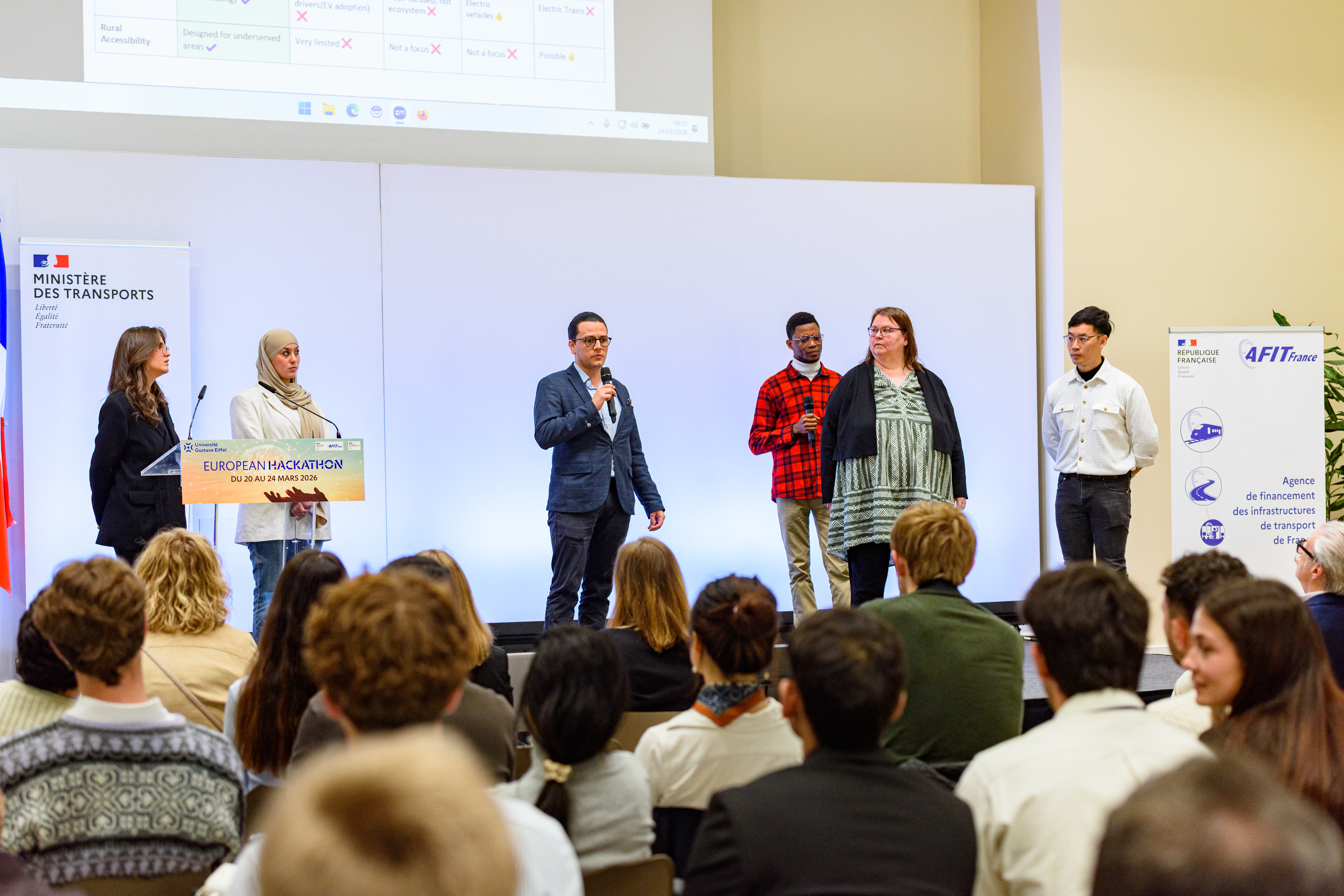
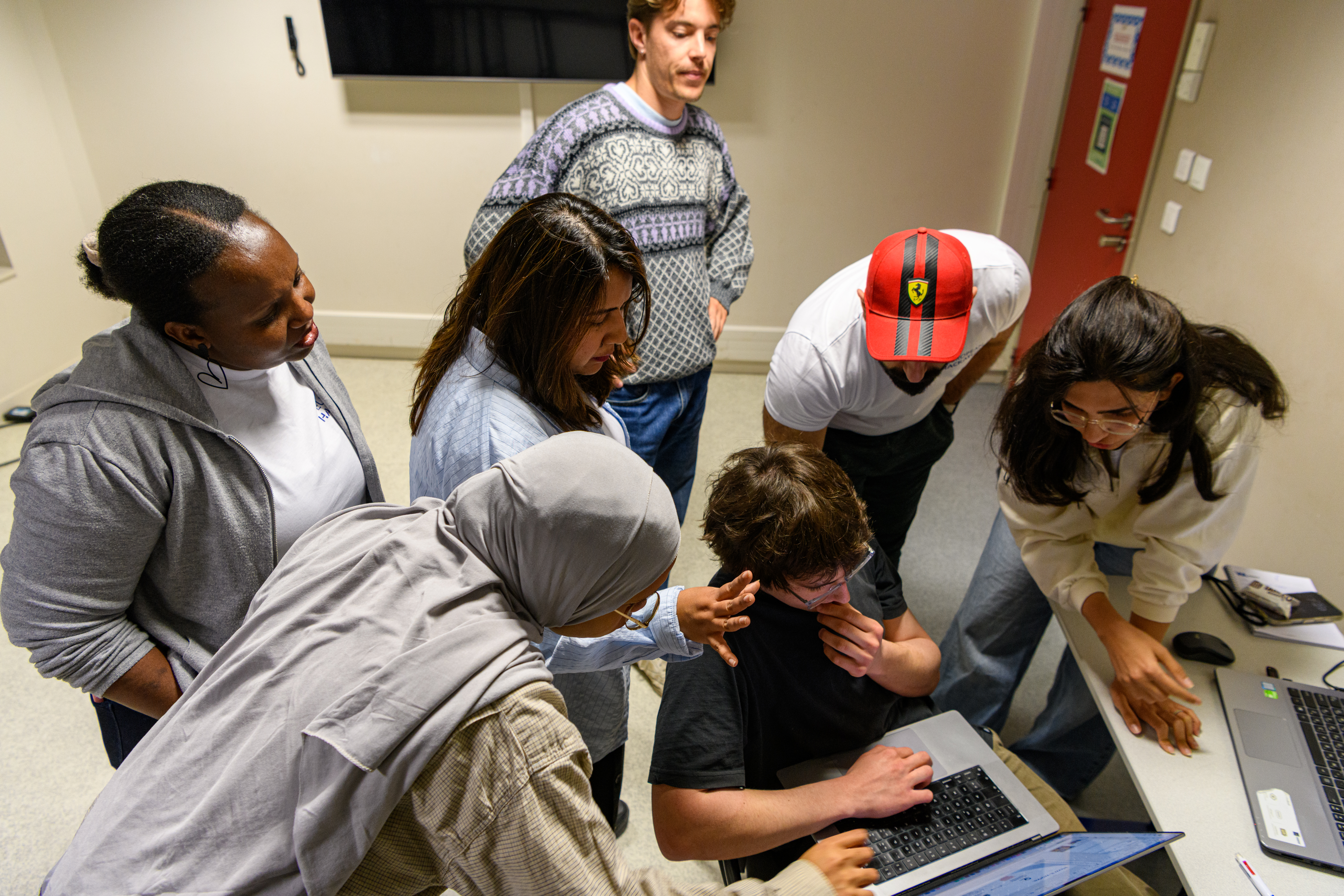
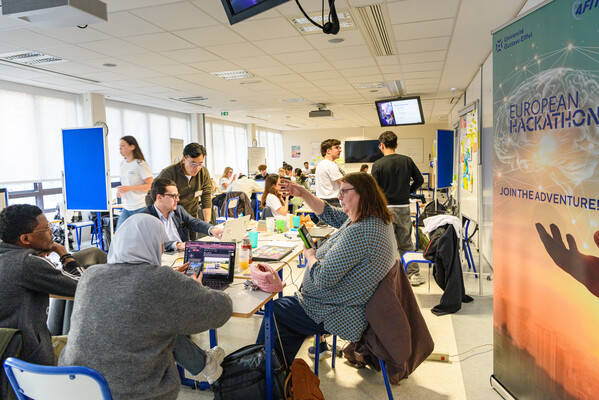
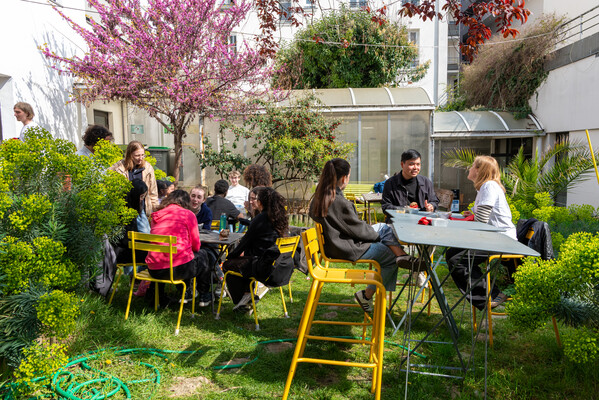
The participants formed eight mixed, interdisciplinary teams, bringing together students from a variety of countries and academic backgrounds. This diversity of approaches and skills encouraged the exchange of ideas across the fields of urban planning, architecture, engineering, spatial data and public policy.
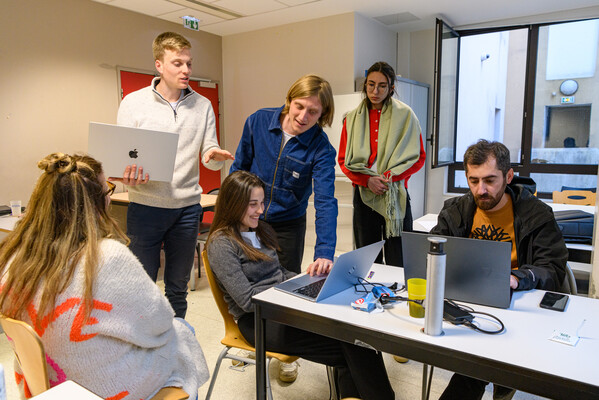
Four days of collaborative innovation
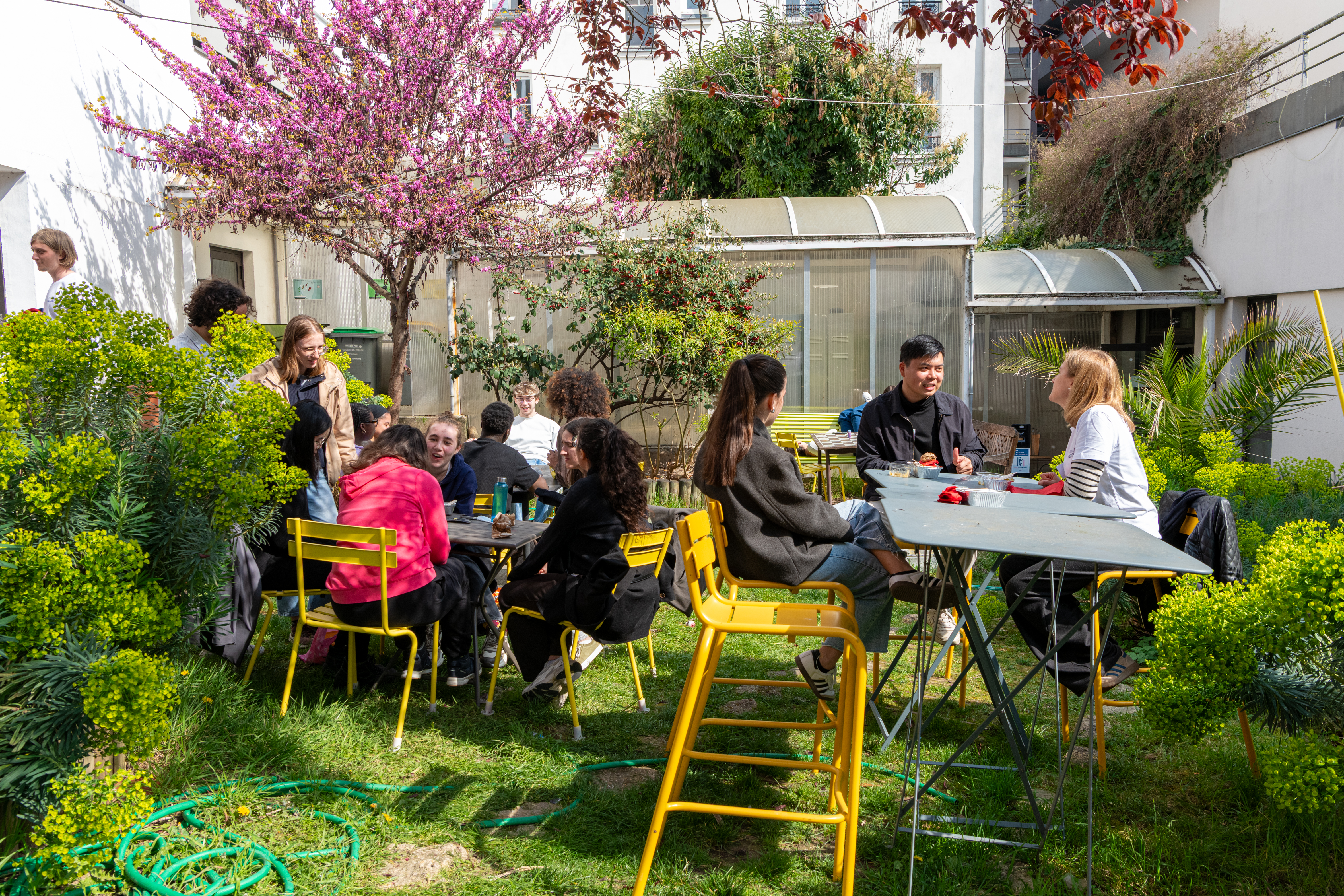
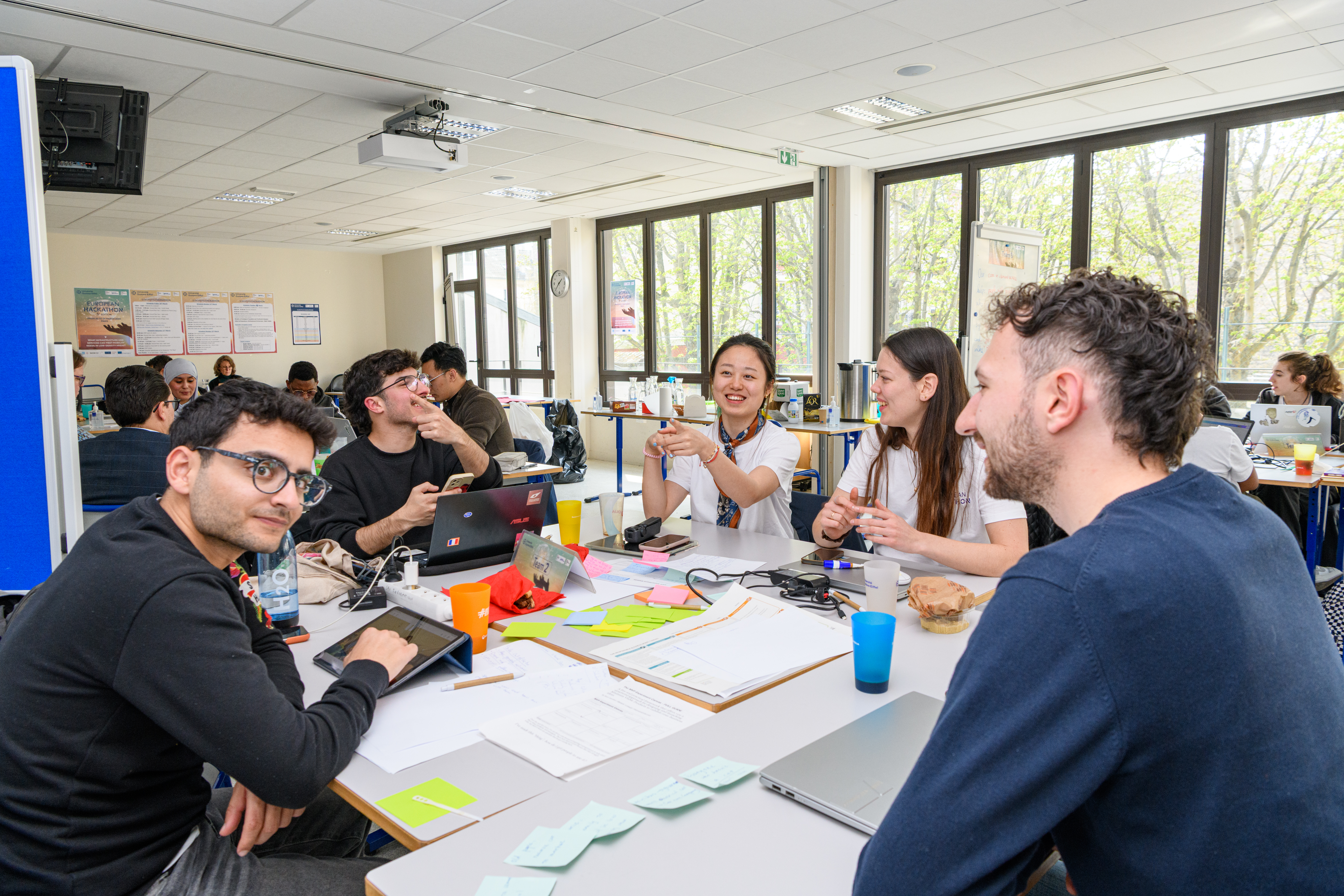
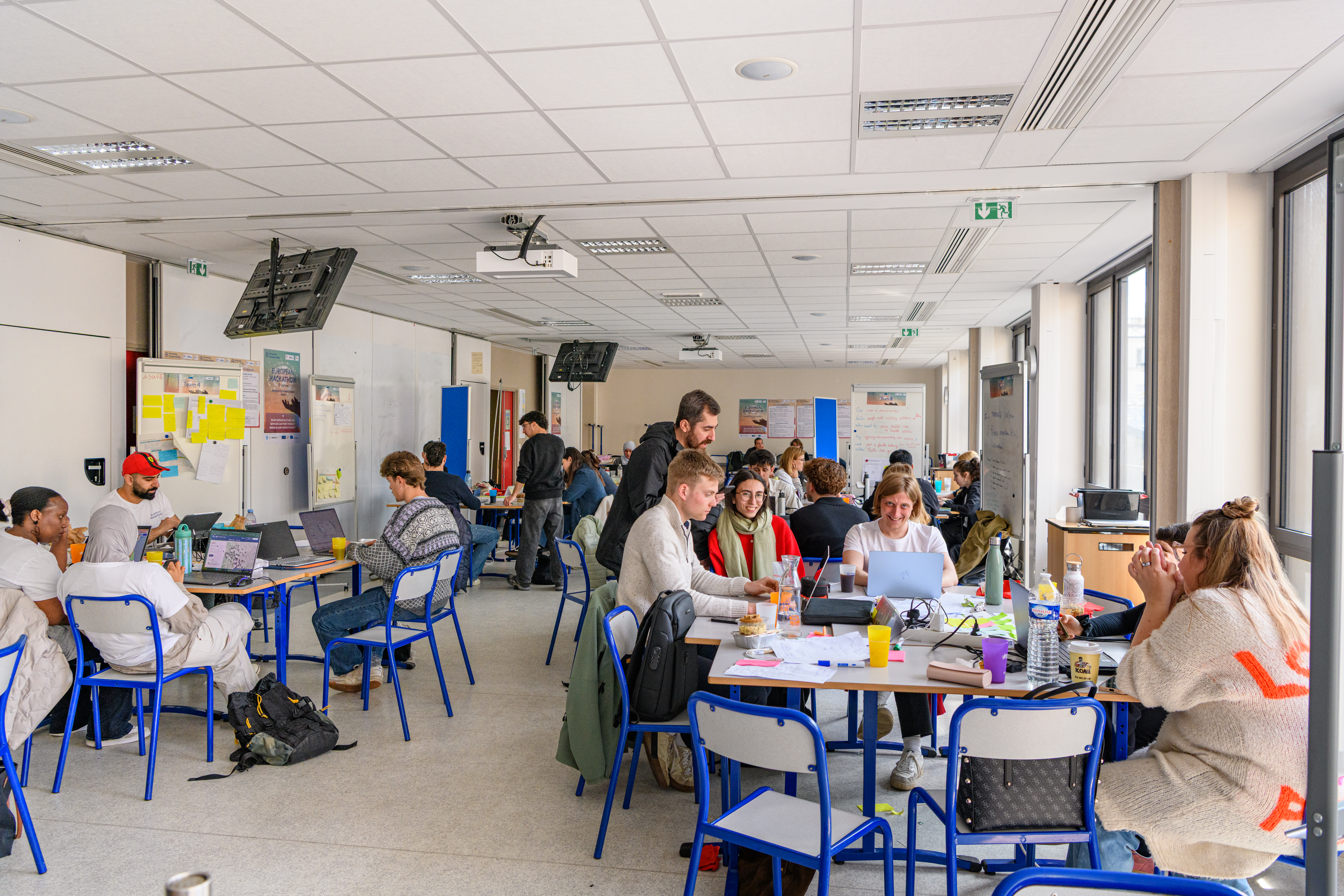
These 45 French and European students gathered for four days at the École des Ingénieurs de la Ville de Paris to work on this year’s theme:
« What infrastructure and services can meet mobility needs in low-density areas? »
Supported by experts and mentors, the participants devised solutions combining technological innovations, service organisation and new regional approaches.
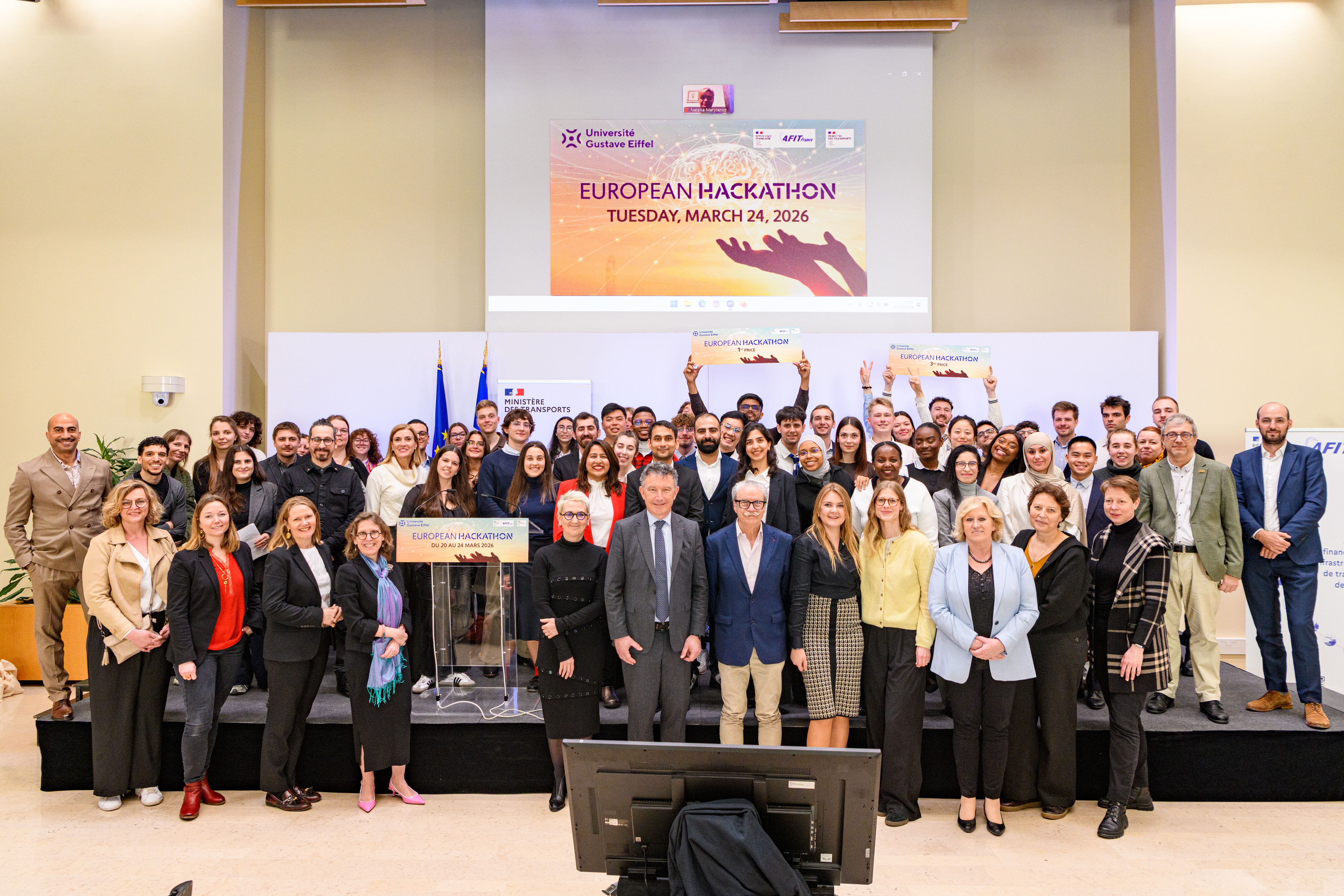
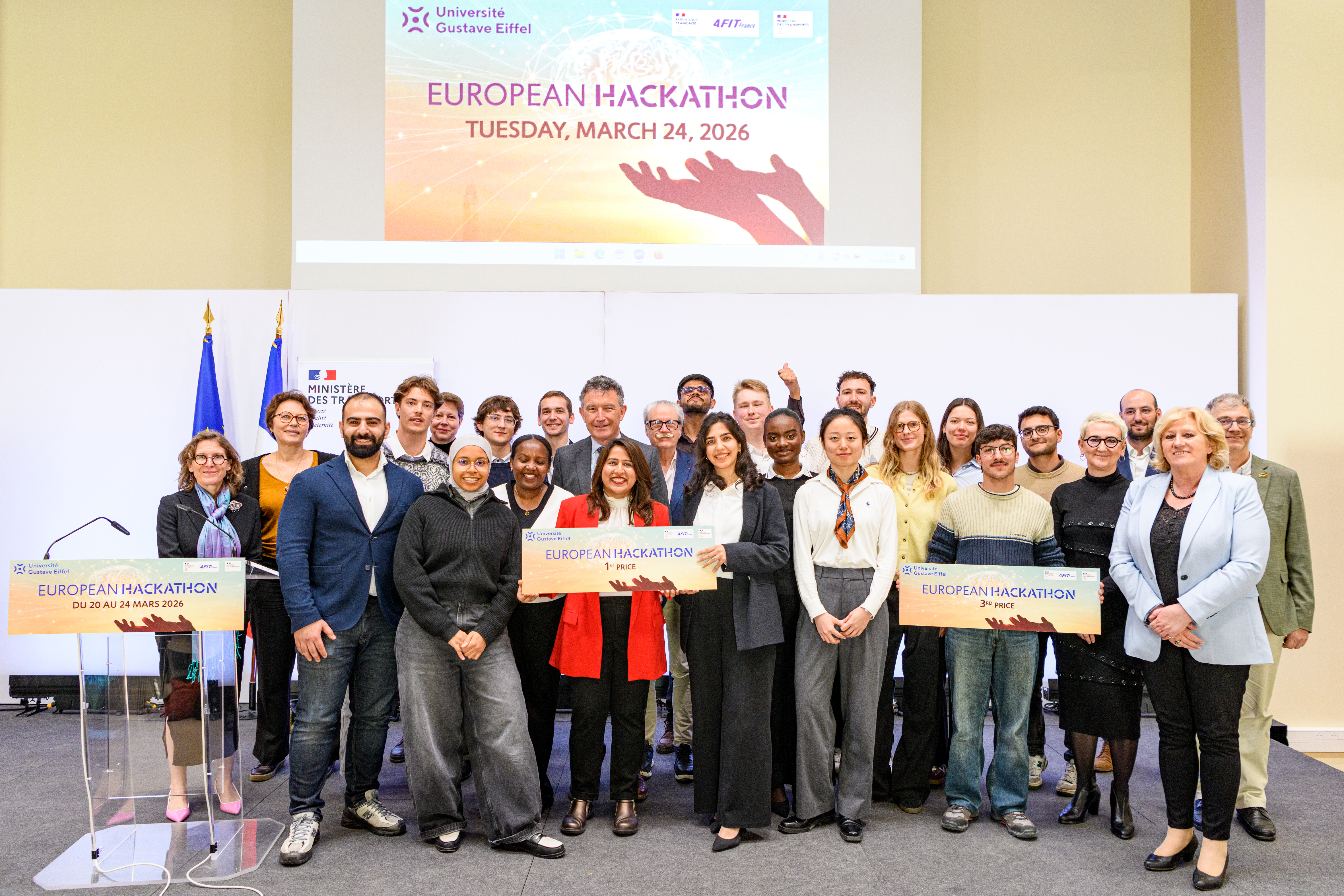
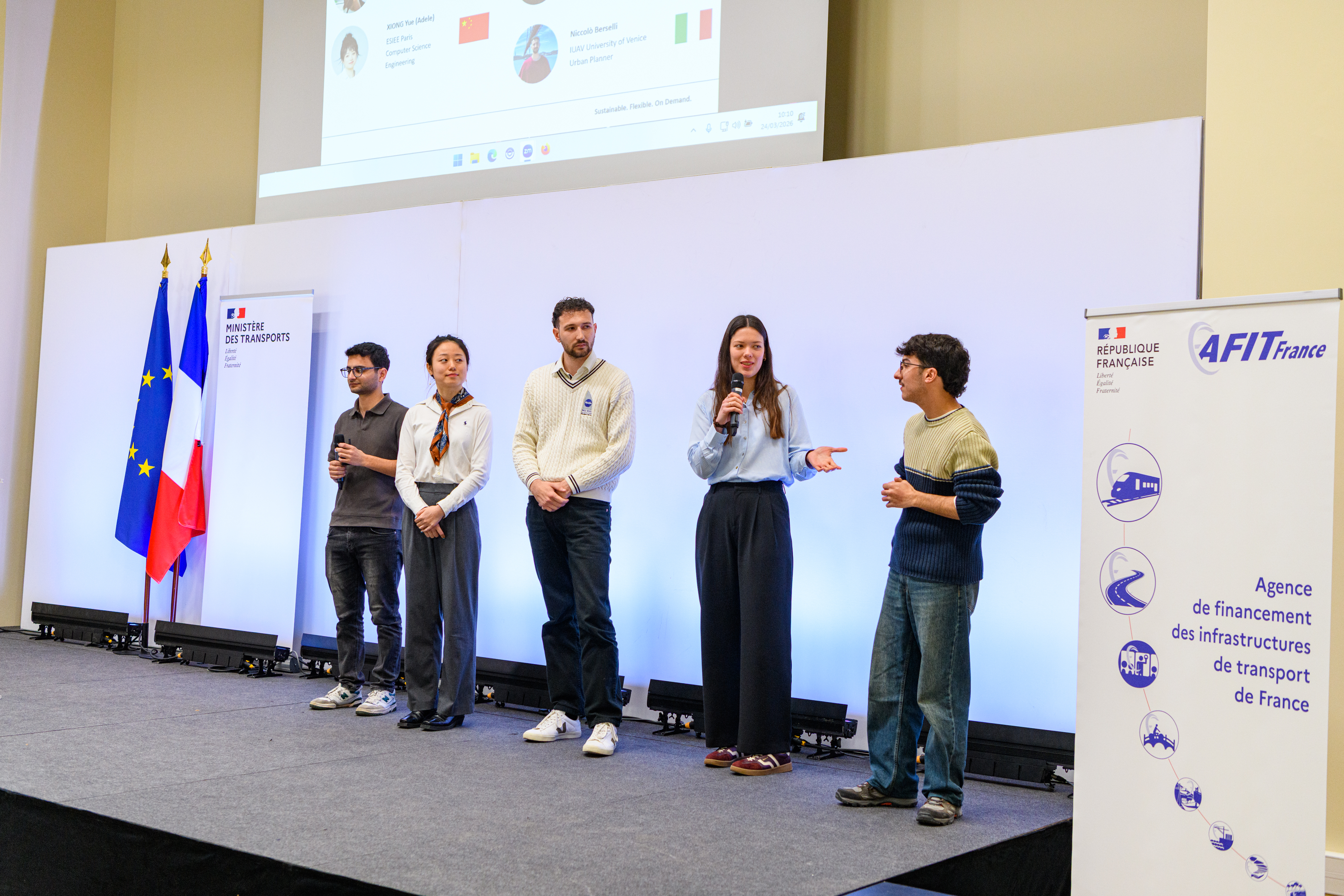
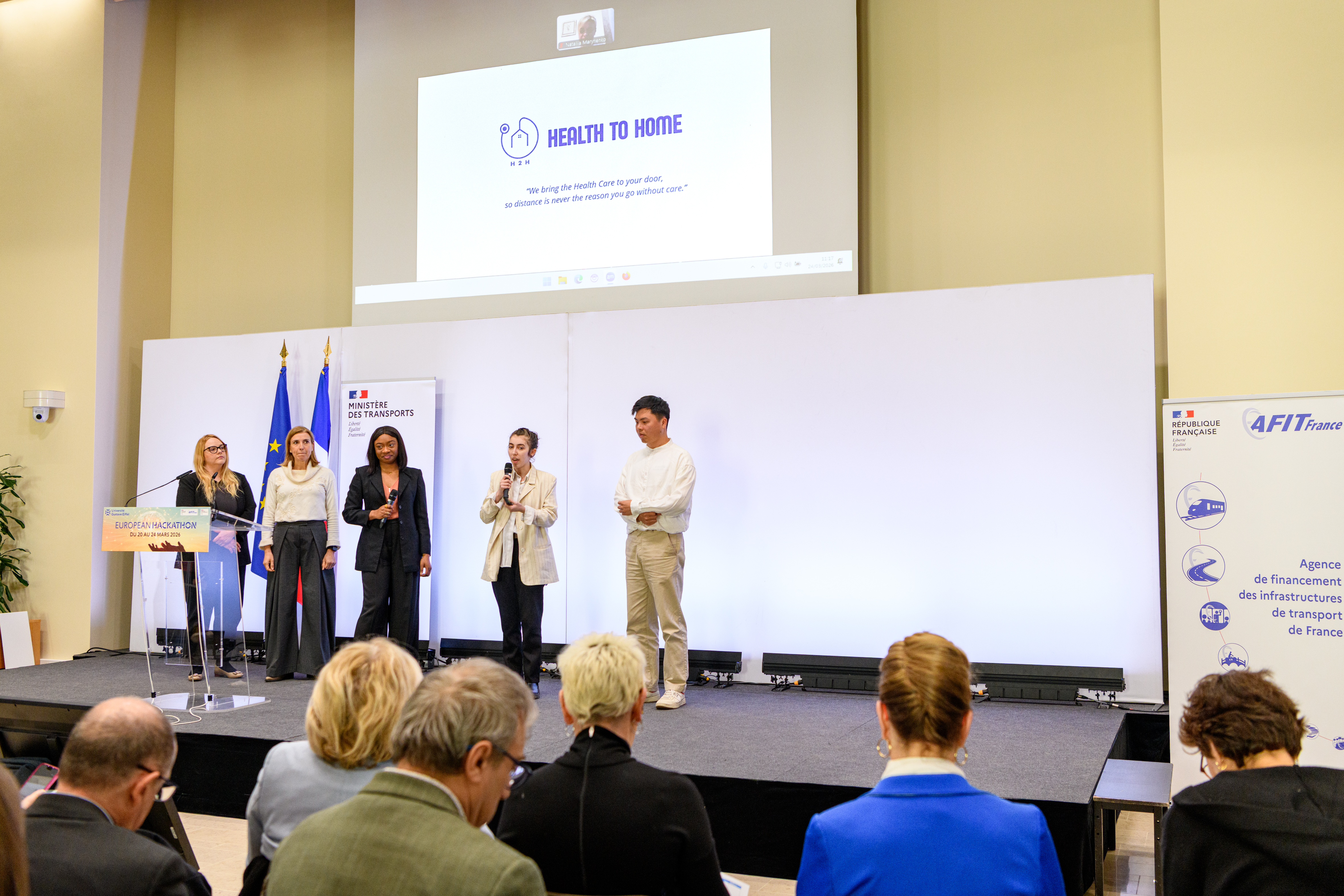
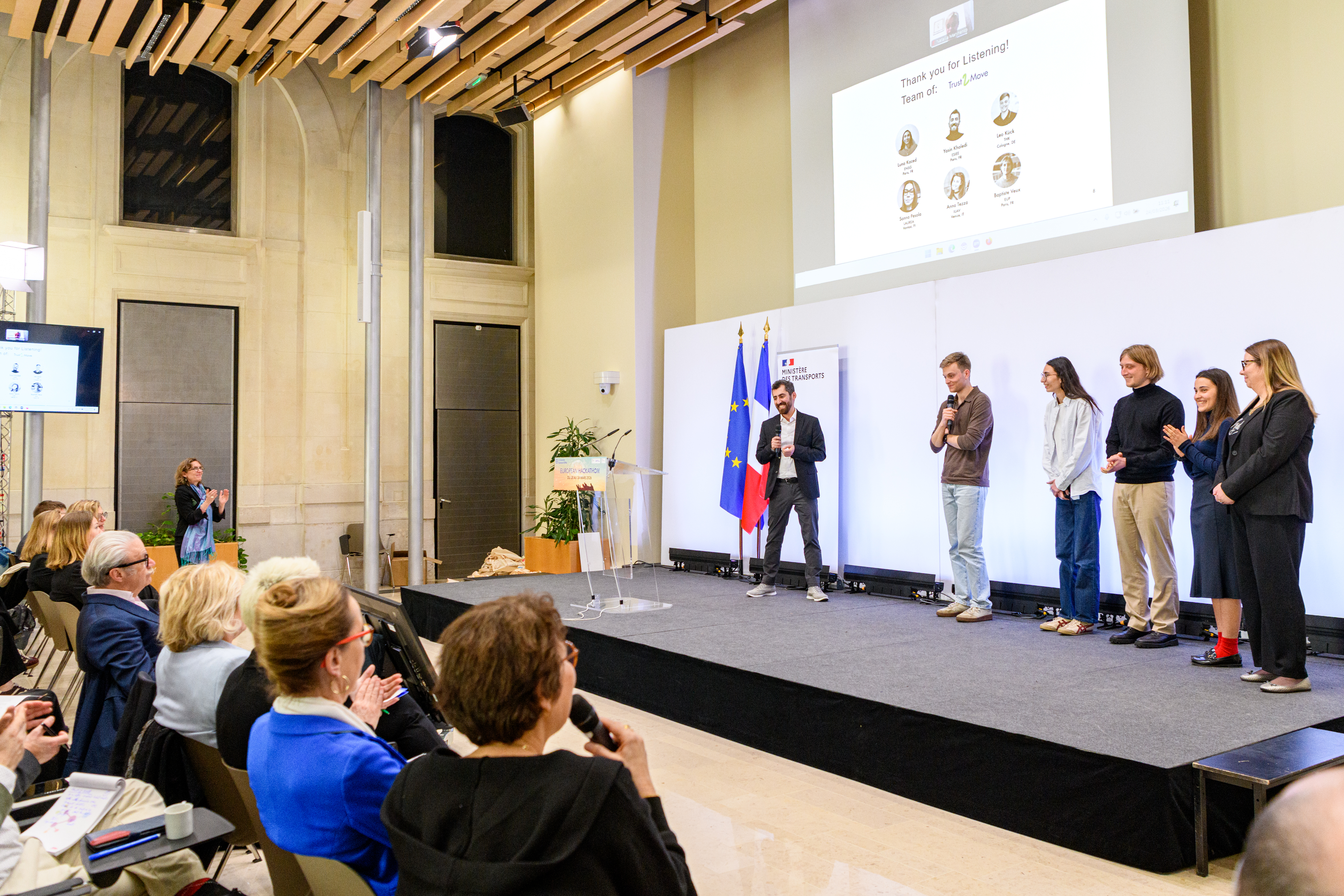
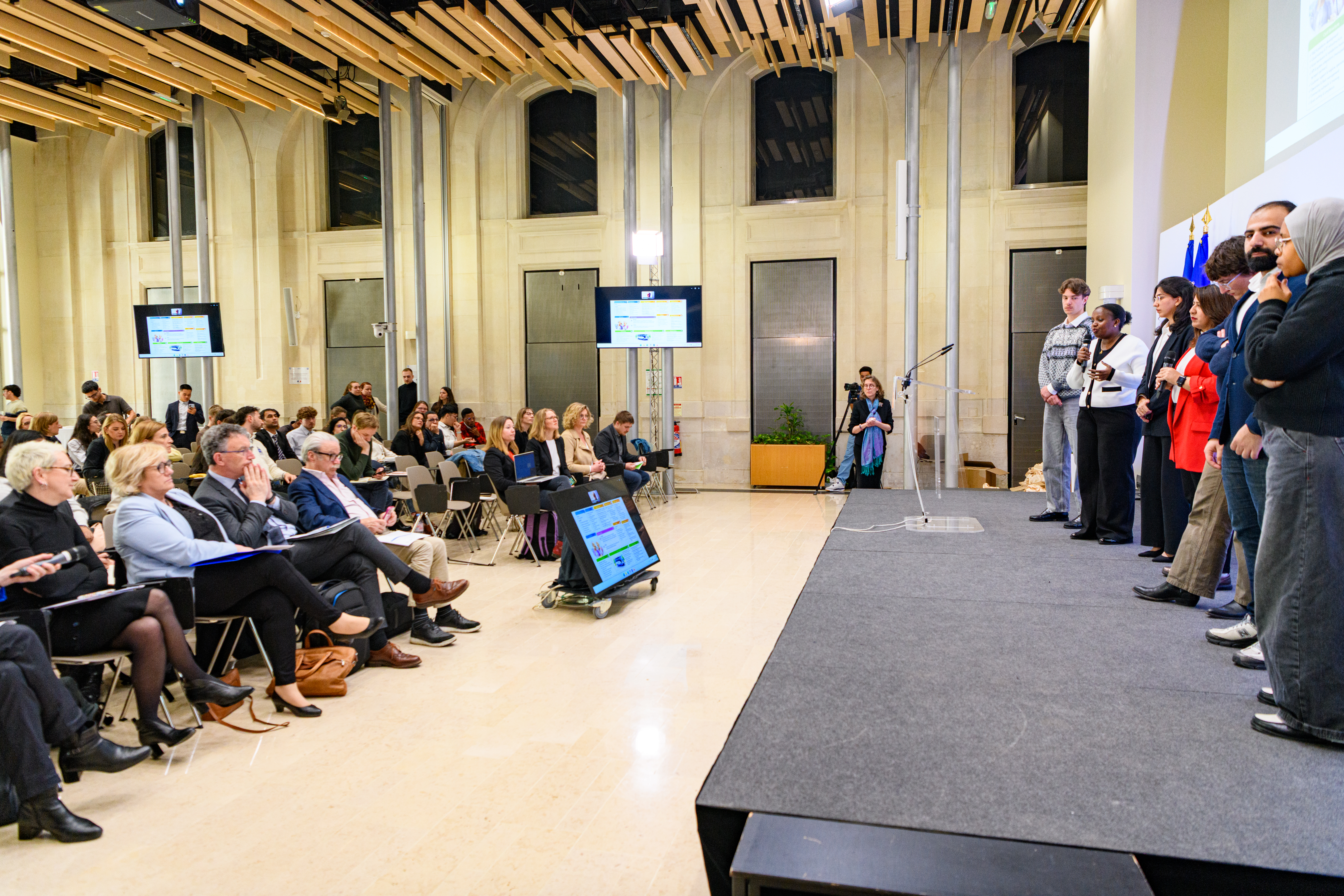
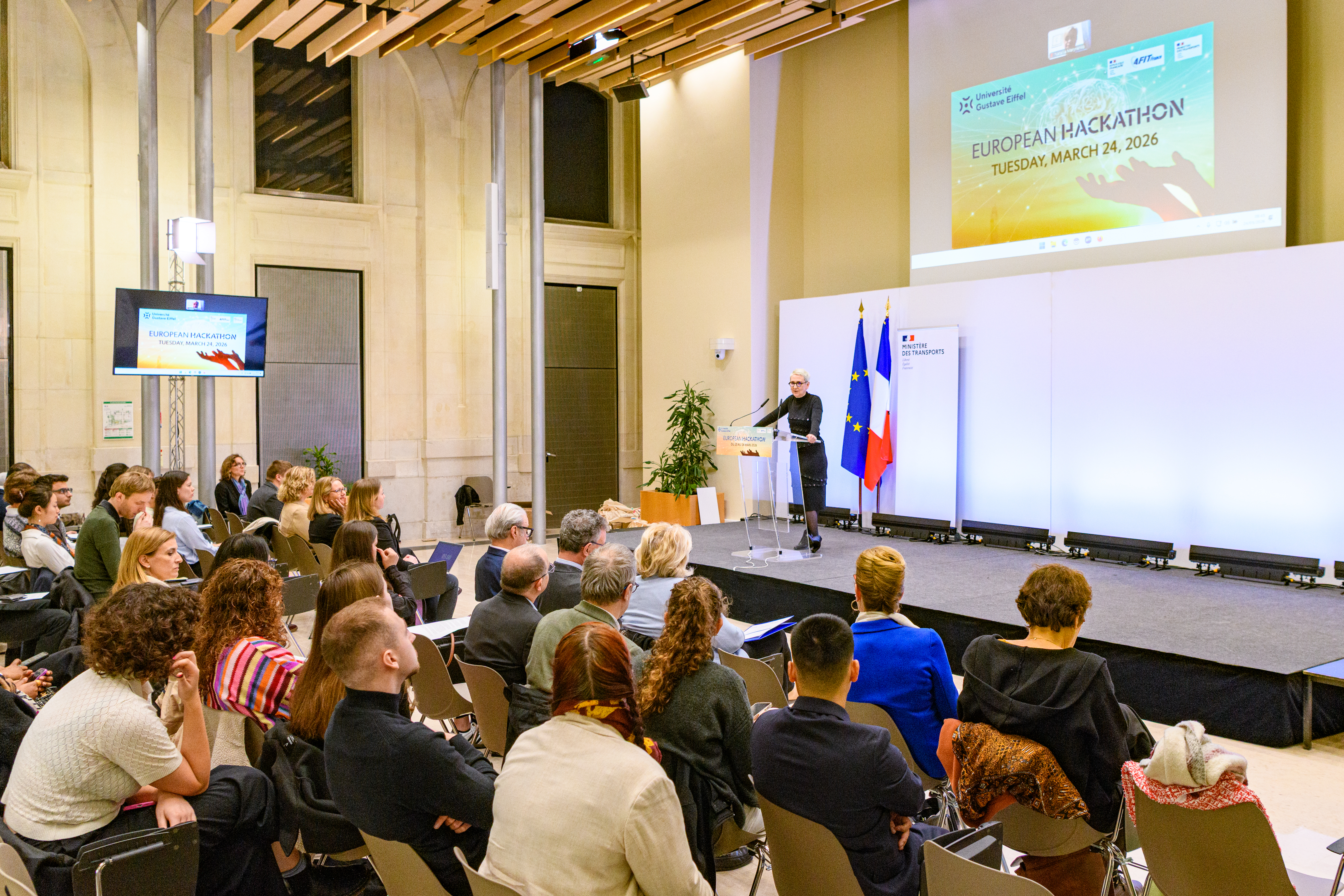
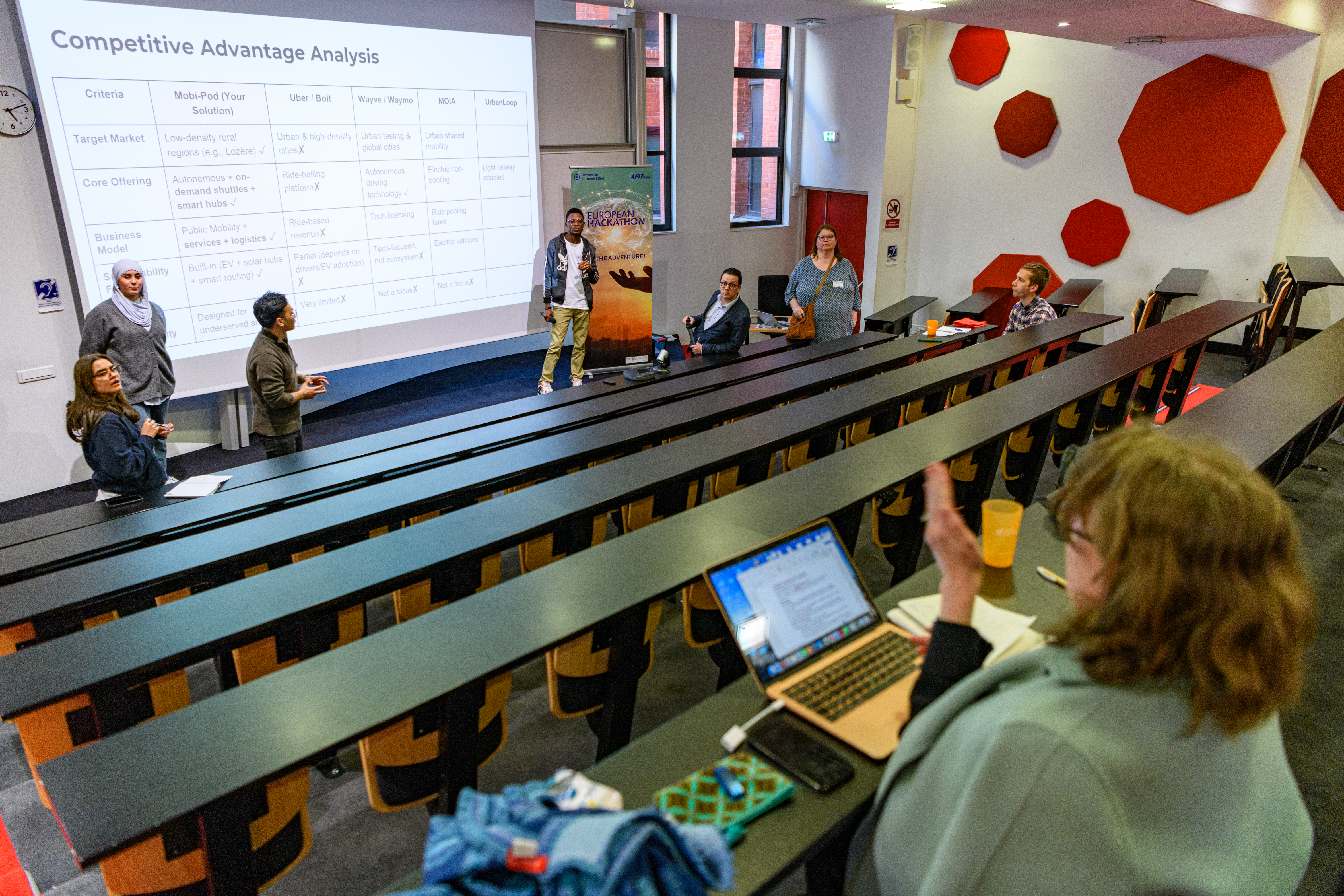
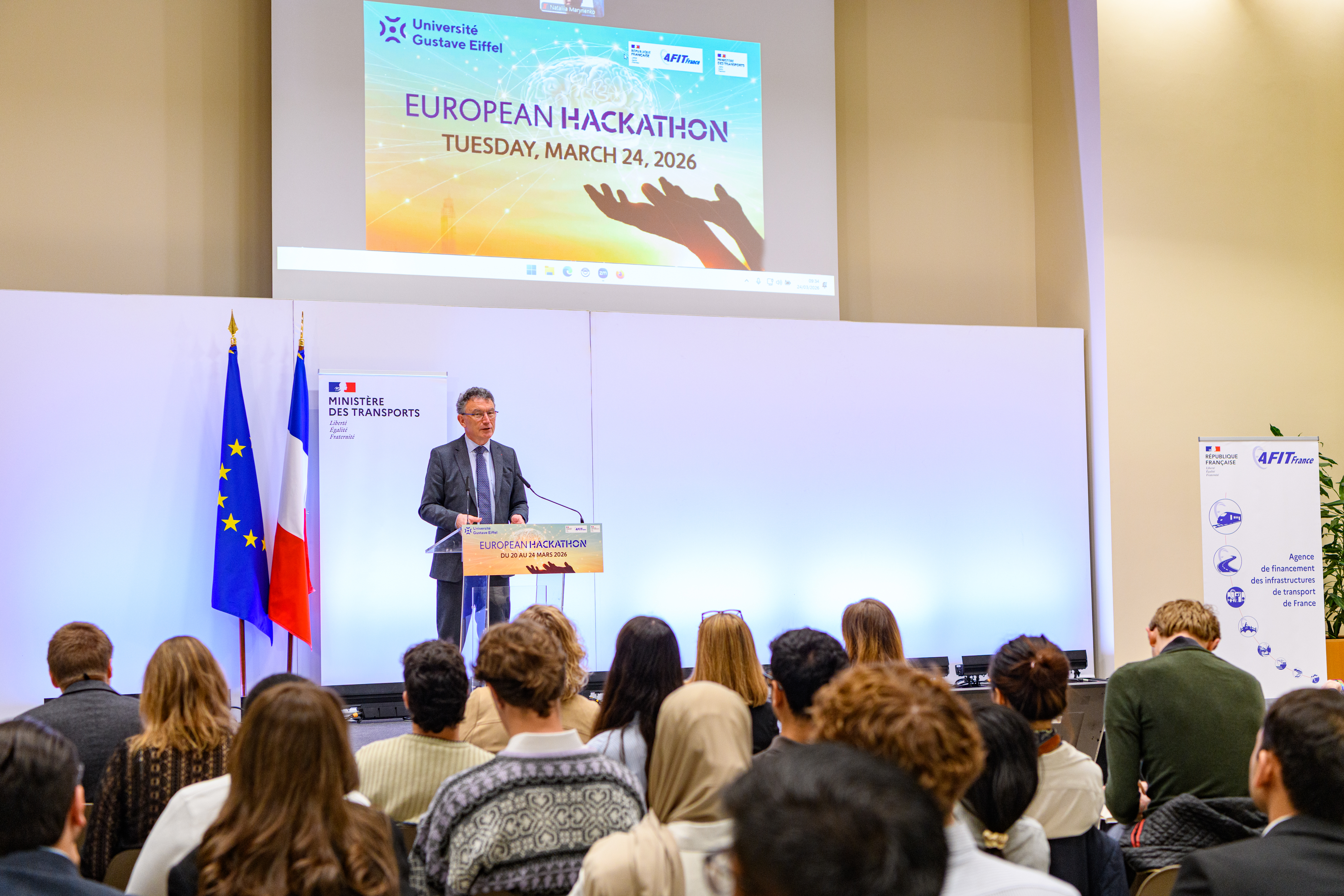
The presentation of the work took place on 24 March at the Ministry for Ecological Transition, Regional Planning, Transport, Cities and Housing at the Hôtel de Roquelaure. It was introduced by a video message from the Minister for Transport, Philippe Tabarot.
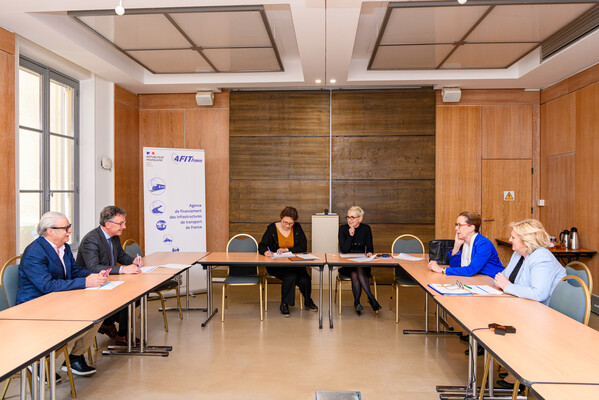
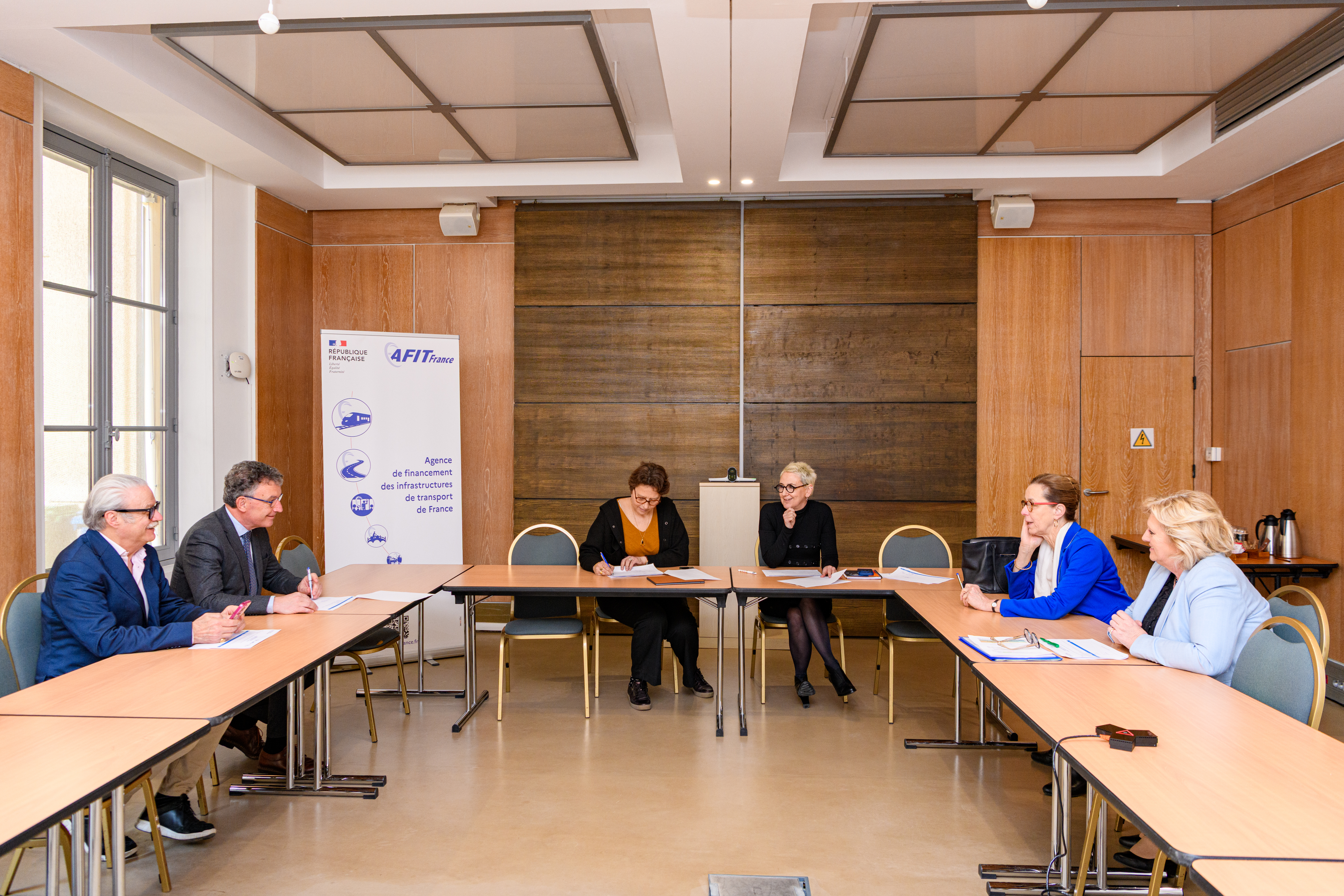
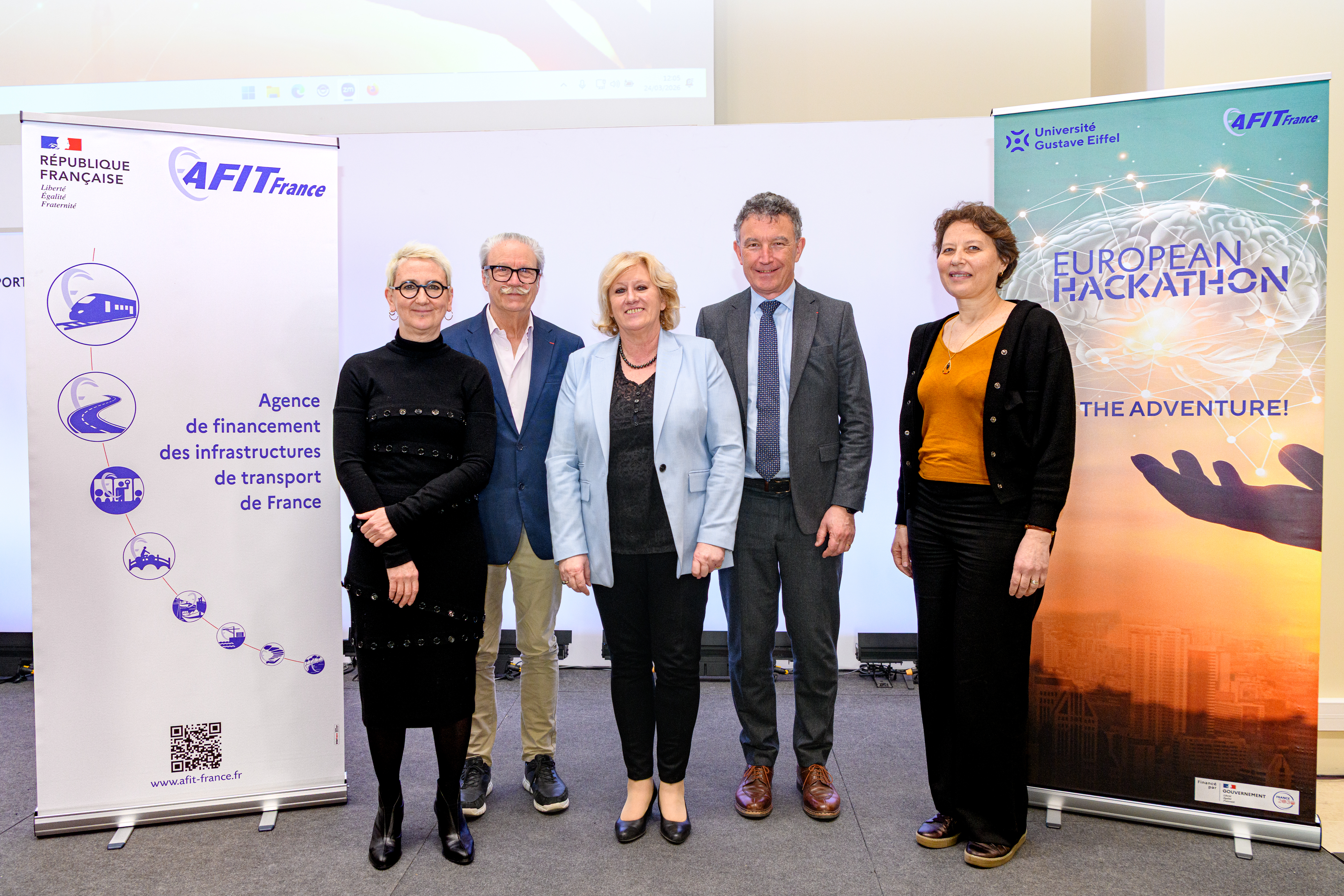
The projects were presented to a jury chaired by Franck LEROY, President of the Grand Est Regional Council and President of AFIT France, and comprising leading figures from the institutional and academic worlds:
- Fabienne KELLER, Member of the European Parliament
- Nadège LEFEBVRE, Chair of the Transport Commission of the Departments of France, President of the Oise Departmental Council
- Michel NEUGNOT, Director, AFIT
- Corinne BLANQUART, President of Université Gustave Eiffel
- Amina BECHEUR, Vice-President for International Affairs at Gustave Eiffel University
Discover the winners of the 5th European Hackathon
The jury members were impressed that, at this 5th European Hackathon, the various teams’ innovative projects had carefully examined the mobility needs of different target groups in low-density areas.
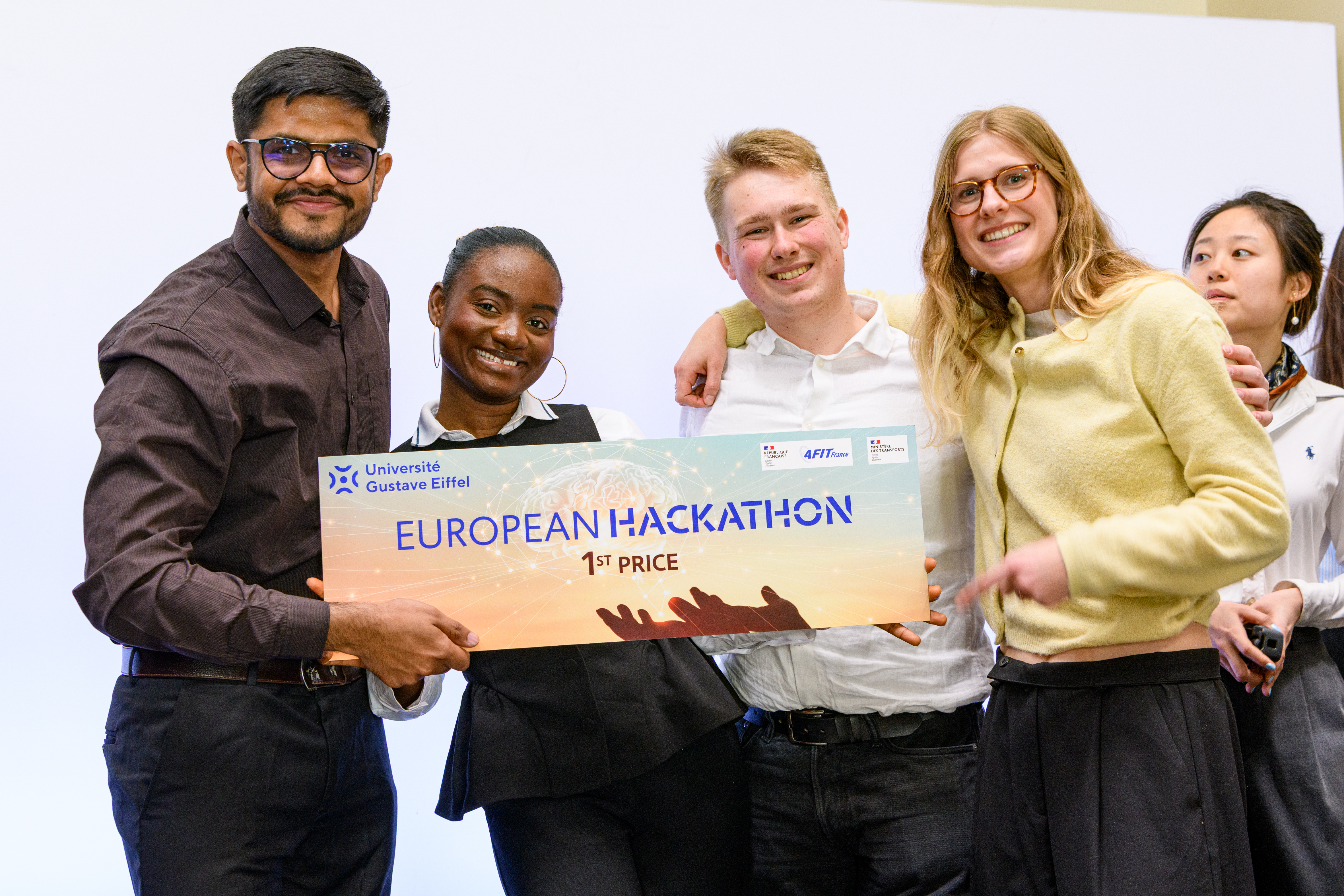
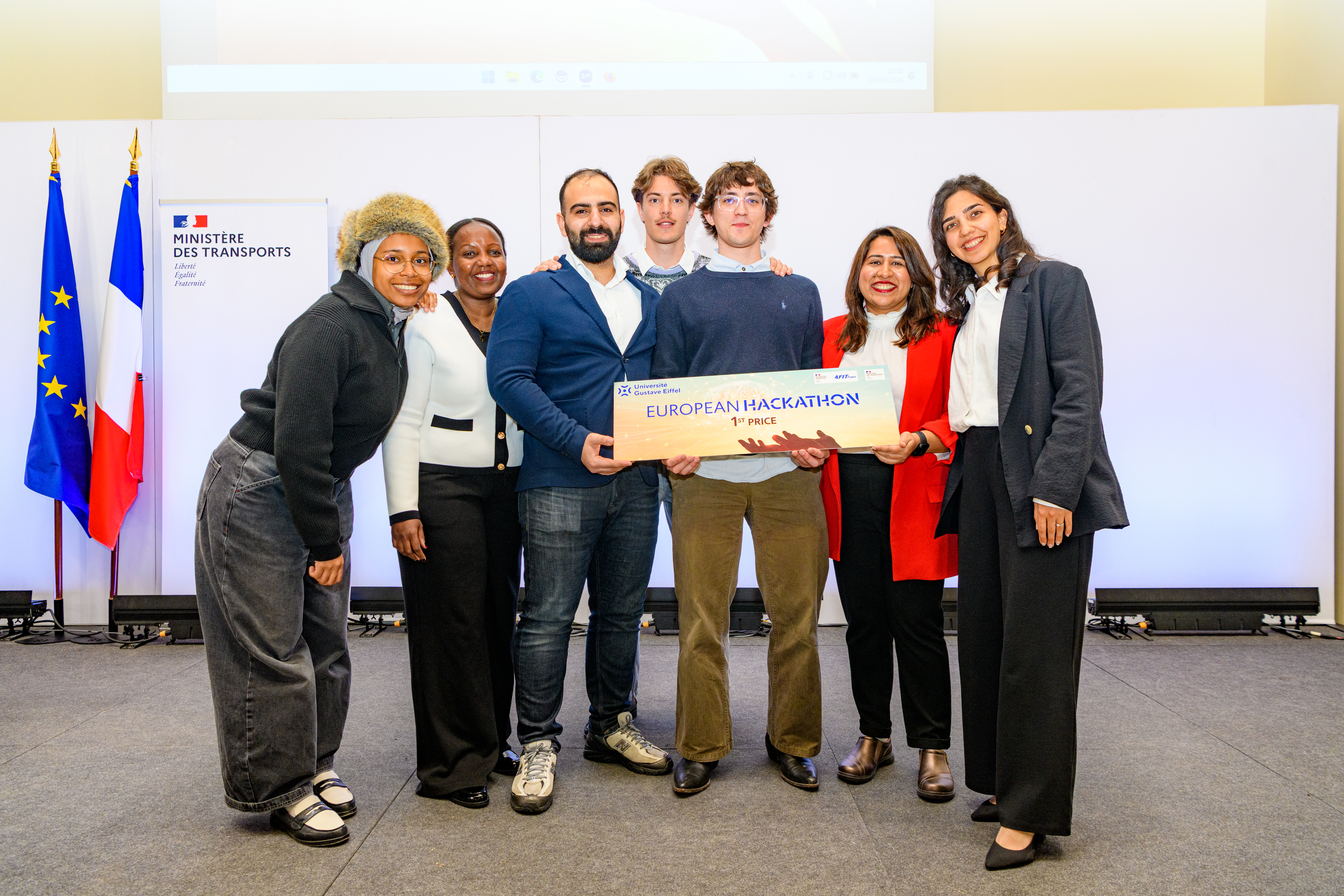
For the first time, the jury members awarded a joint first prize due to the potential benefits of combining the two proposals.
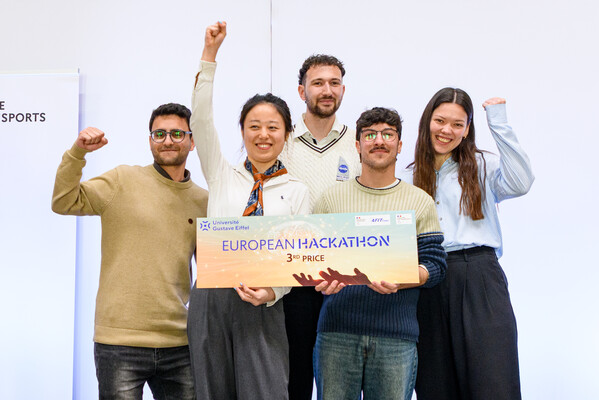
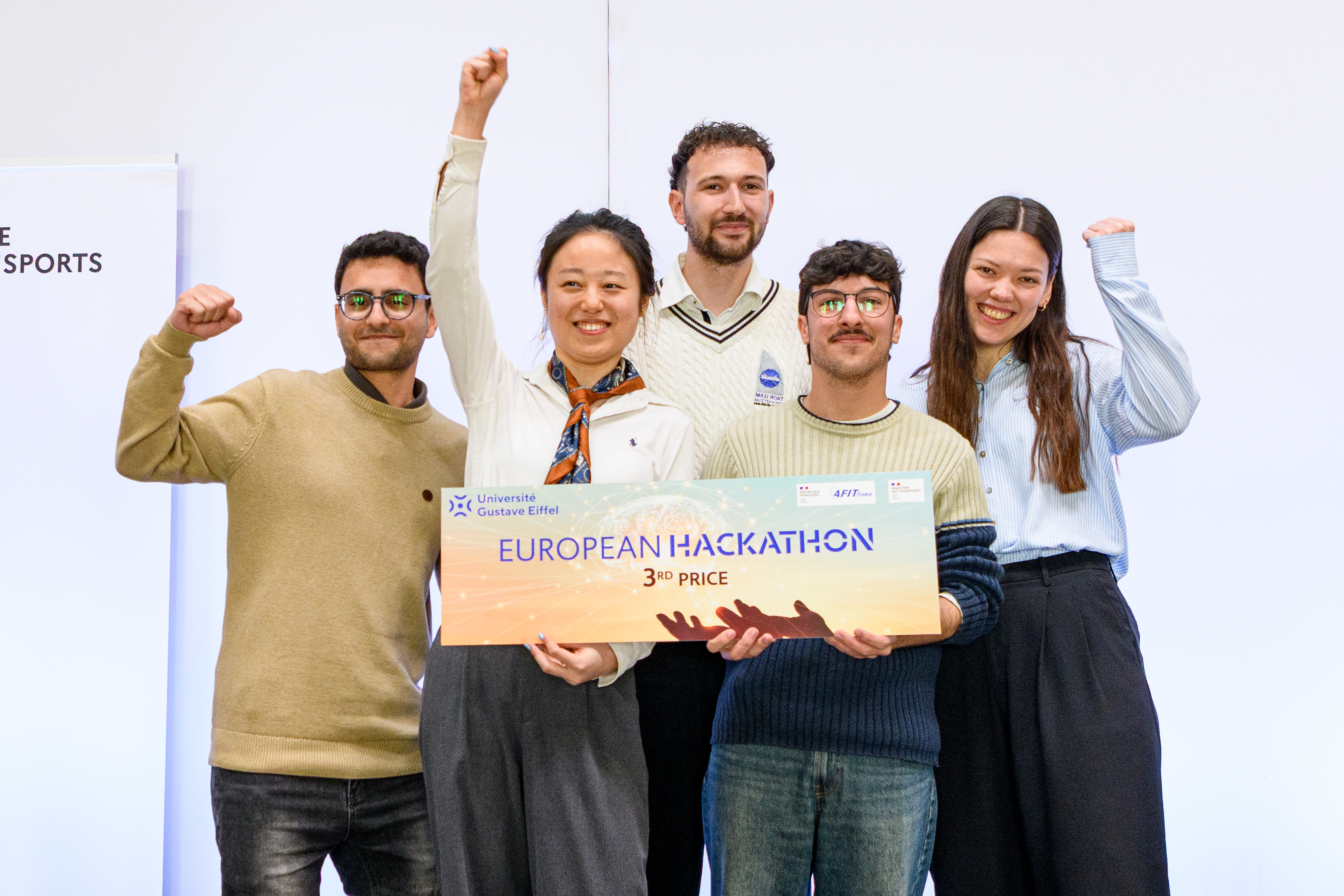
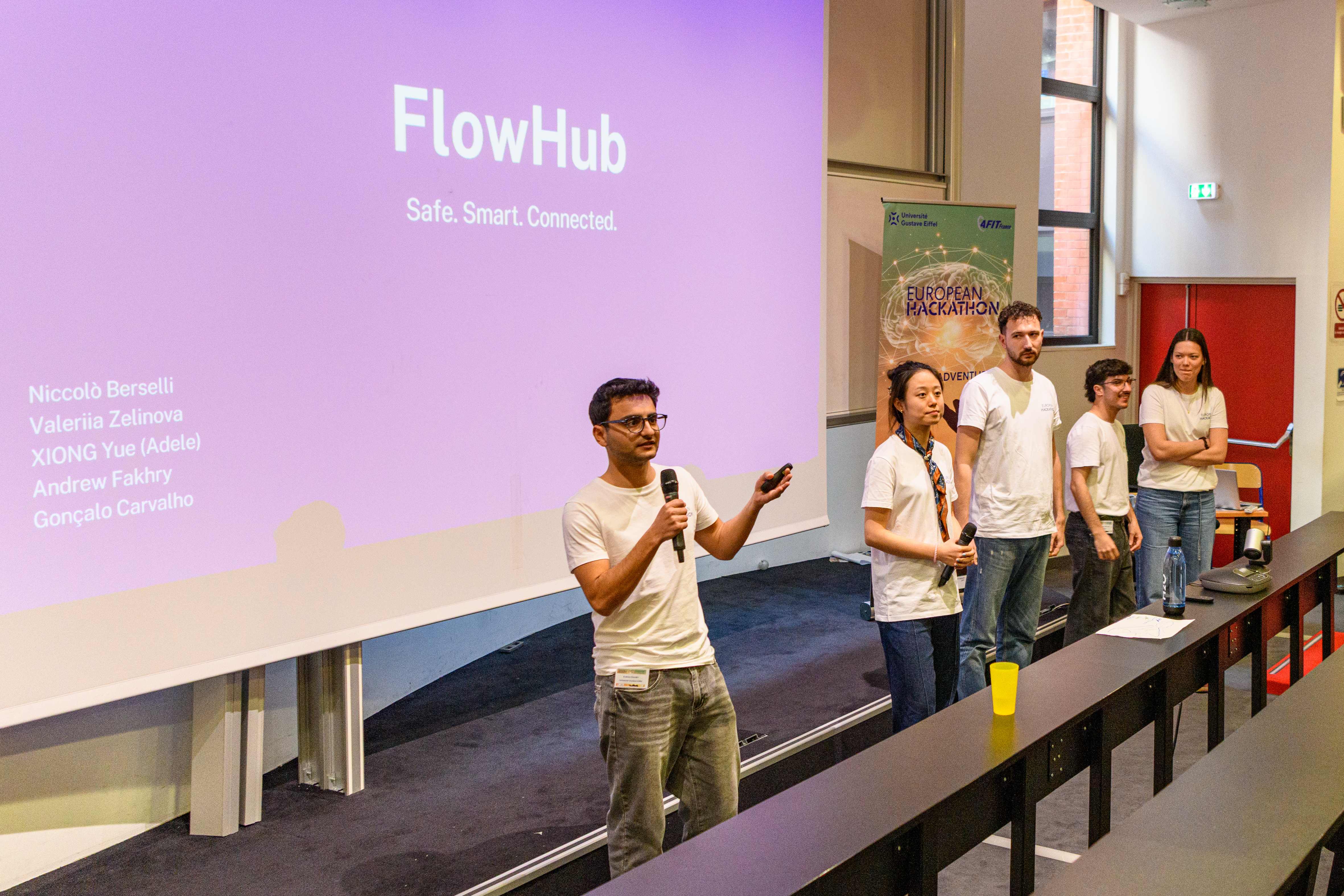
Project FlowHub 3rd price
Team 2 :
- Niccolò BERSELLI, IUAV, Italy
- Andrew FAKHRY, ESIEE Paris – Université Gustave Eiffel, France
- Gonçalo MARTINHO DE CARVALHO, ISCTE, Portugal
- Yue XIONG, ESIEE Paris, Université Gustave Eiffel, France
- Valeria ZELINOVÁ, UNIZA, Slovakia
FlowHub is a mobility hub project designed for very sparsely populated areas, offering a bespoke solution to transport needs through a fleet of automated minibuses adapted for older people and those with reduced mobility. The hubs are set up in disused premises with a view to revitalising them.
The jury appreciated the ambition to address the issue of mobility for the target groups by linking it to urban regeneration projects.
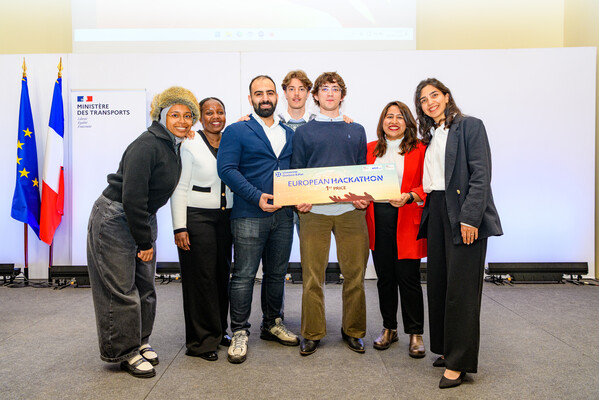
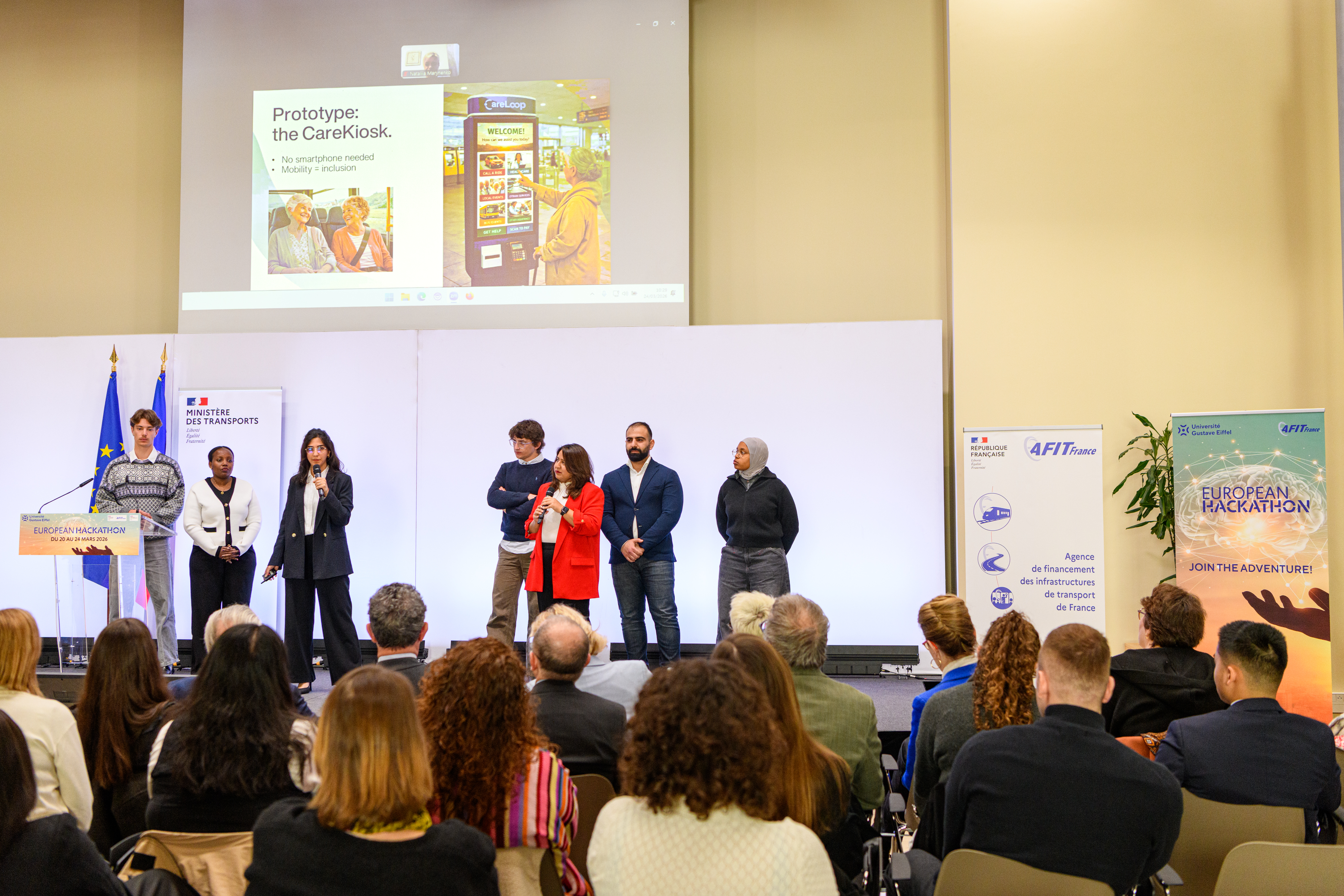
Project CareLoop 1st price
Team 4 :
- Maryam ALAVI, IGM - Université Gustave Eiffel, France
- Elouan BELLIARD, Géodata Paris – Université Gustave Eiffel, France
- Cherazad HAFIDHOU, EIVP – Université Gustave Eiffel, France
- Poorya KARAMI, UNIBO, Italy
- Enrico MOGNATO, IUAV, Italy
- Gladys Nuwagira NDYANABO, ESIEE Paris – Université Gustave Eiffel, France
- Namrata SETHI, LAUREA, Finland
CareLoop aims to facilitate the mobility of elderly people to care centers through a platform accessible by phone or SMS, and compatible with existing systems, allowing optimization of access to care through the offer of transport on request.
The jury valued taking into account the uses of elderly people by proposing a solution compatible with their uses.
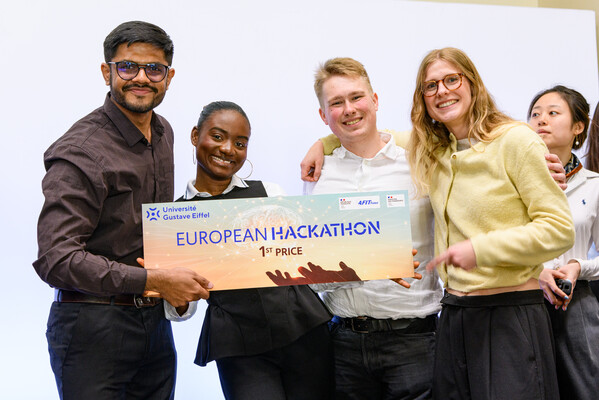
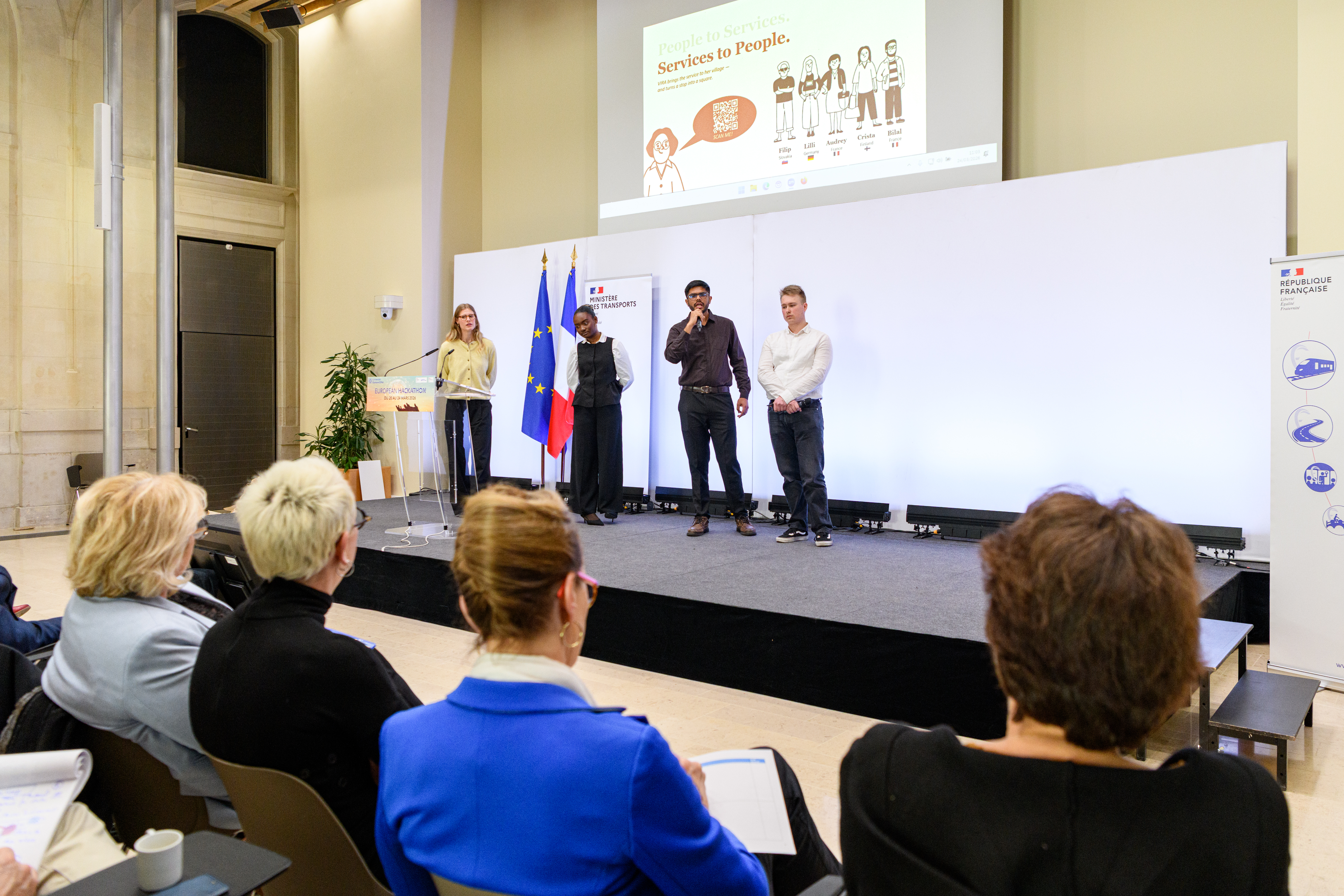
Project VIRA 1st price
Team 6 :
- Audrey BENFO, ESIEE Paris – Université Gustave Eiffel, France
- Lilli BIELER, TH Köln, Germany
- Hafiz Muhammad BILAL, ESIEE Paris – Université Gustave Eiffel, France
- Filip SEFCIK, UNIZA, Slovakia
- Crista SILFVER, LAUREA, Finland
VIRA (Village Integrated resources and amenities) is a mobile, multi-service hub bringing essential services like grocery, pharmacy and social revival back to rural villages and thus reducing car dependency, the lack of local services, social isolation and loss of dignity.
The jury appreciated the change of perspective that is moving the service to the user, the optimization and deployment efforts.
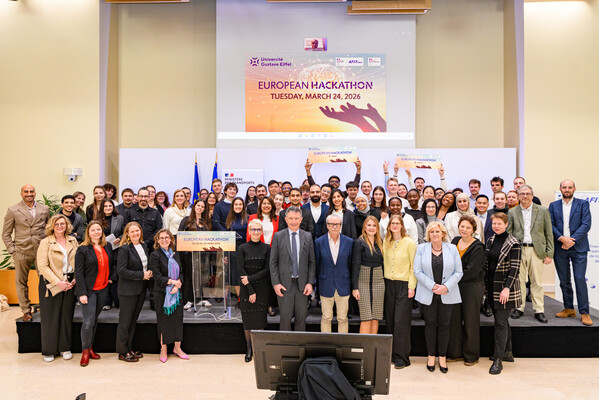
Congratulations to the winning teams and to all the participants for their innovative work!
The students who won first prize were also delighted to receive a special award from Fabienne Keller, Member of the European Parliament.
On 20 May, the CareLoop and VIRA teams have been invited to the European Parliament in Strasbourg to present their projects once again as part of ‘May on a Bike’.
A hackathon to bridge the gap between education, research and public policy
By bringing together students, researchers and institutional stakeholders to tackle a real-world challenge, this hackathon provides a space for experimentation and dialogue on the mobility solutions of the future.
The proposals developed by the students help to explore new avenues for addressing the challenges of accessibility, the green transition and spatial planning, particularly in low-density areas.
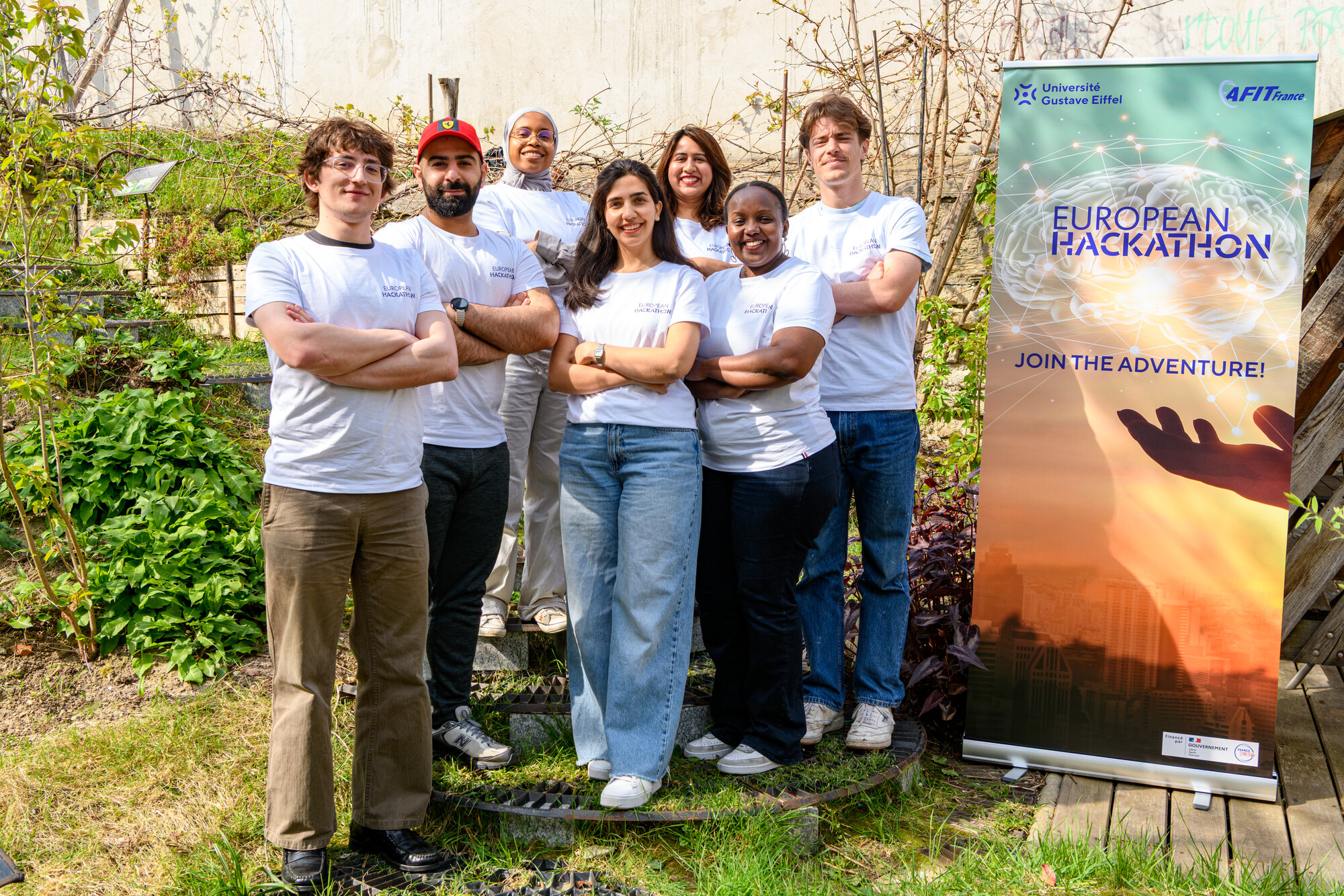
![[Translate to English:] Team 1](/fileadmin/_processed_/4/a/csm_Hackathon-GEiffel-Afit_2026_TEAM-1_c_VincentGerbet-1_c67e736844.jpg)
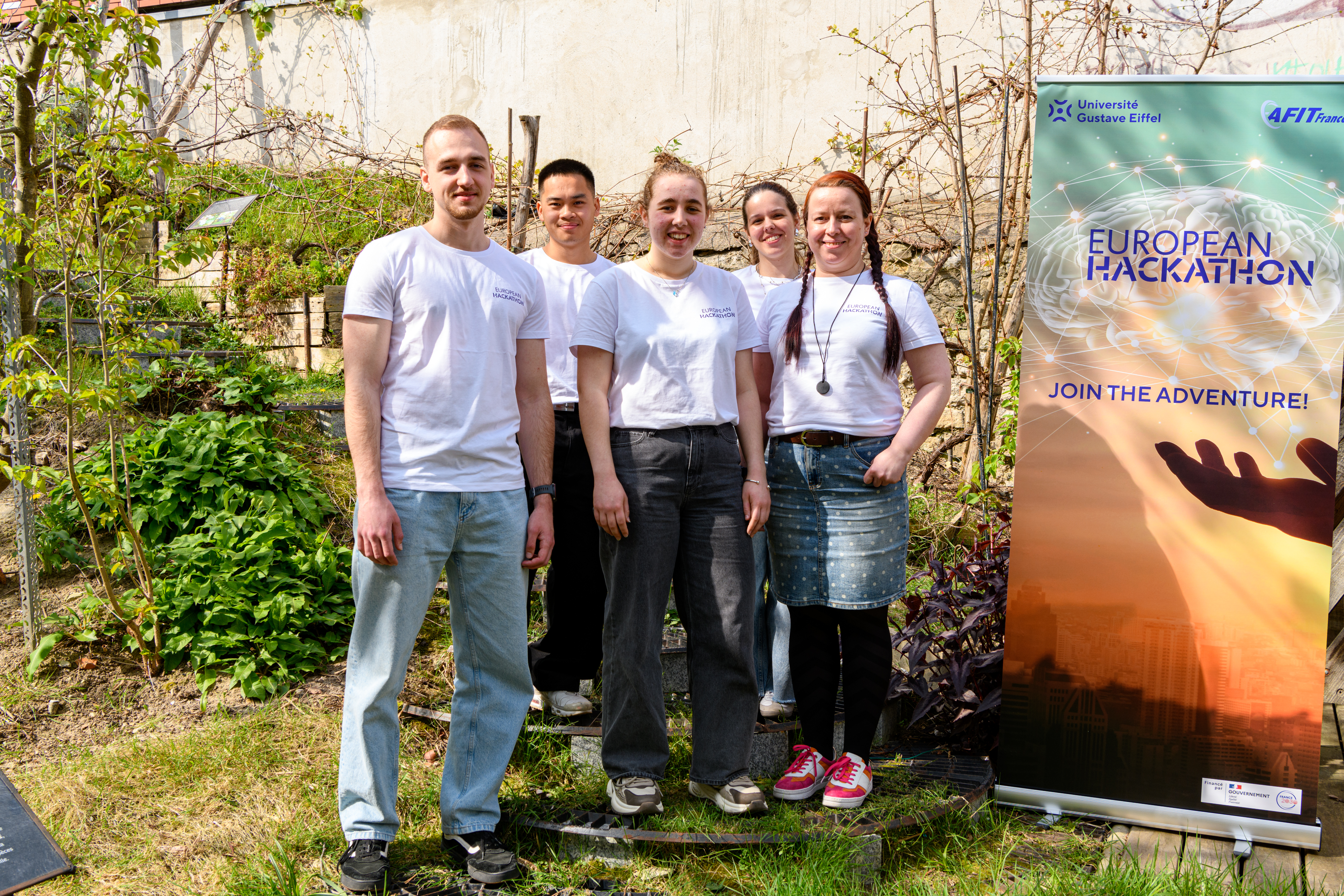
![[Translate to English:] Team 2](/fileadmin/_processed_/b/5/csm_Hackathon-GEiffel-Afit_2026_TEAM-2_c_VincentGerbet-13_3856ba784c.jpg)
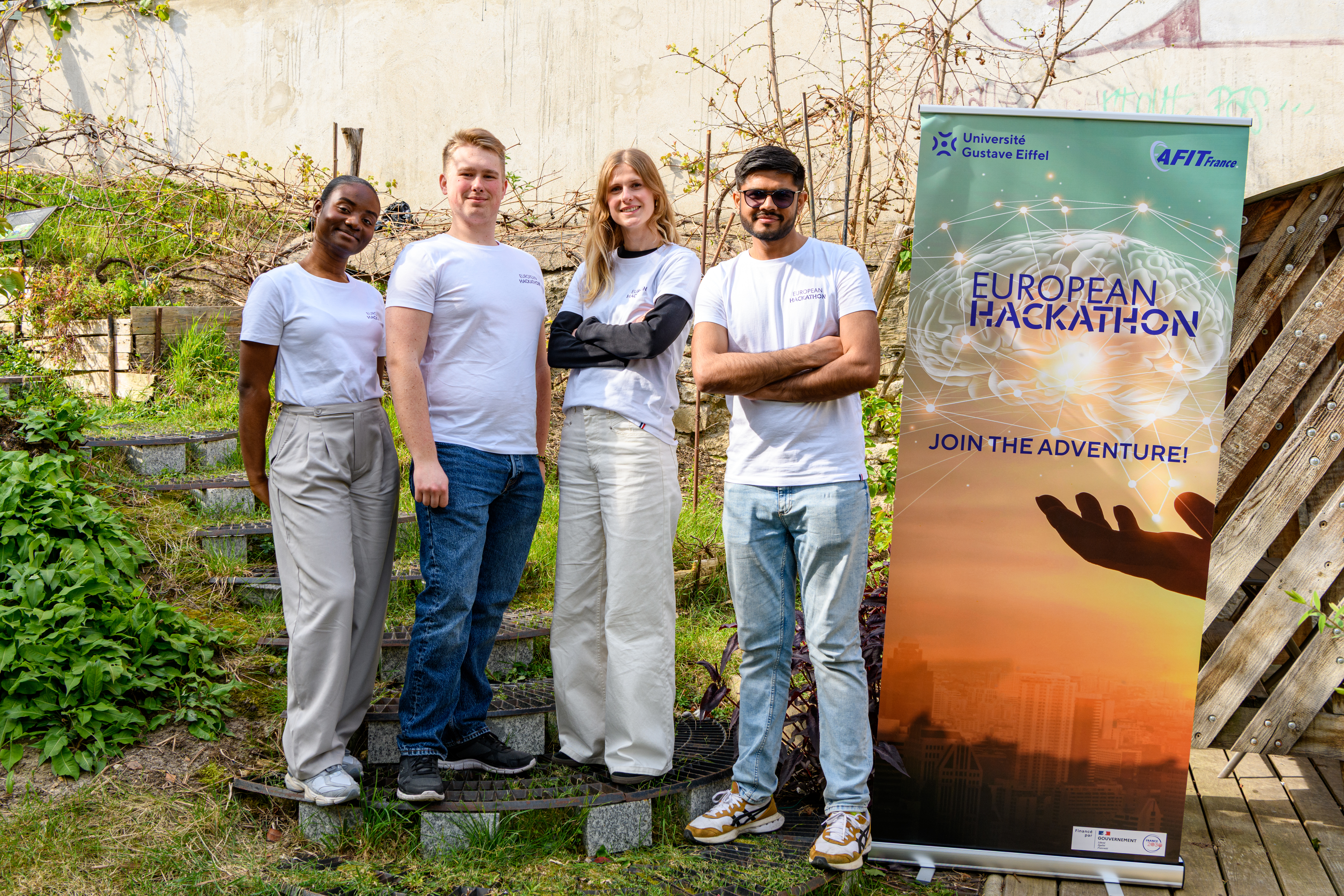
![[Translate to English:] Team 3](/fileadmin/_processed_/d/1/csm_Hackathon-GEiffel-Afit_2026_TEAM-3_c_VincentGerbet-3_62c6099813.jpg)